Tieshan Zhi Vol. 1 — Qingtian Street
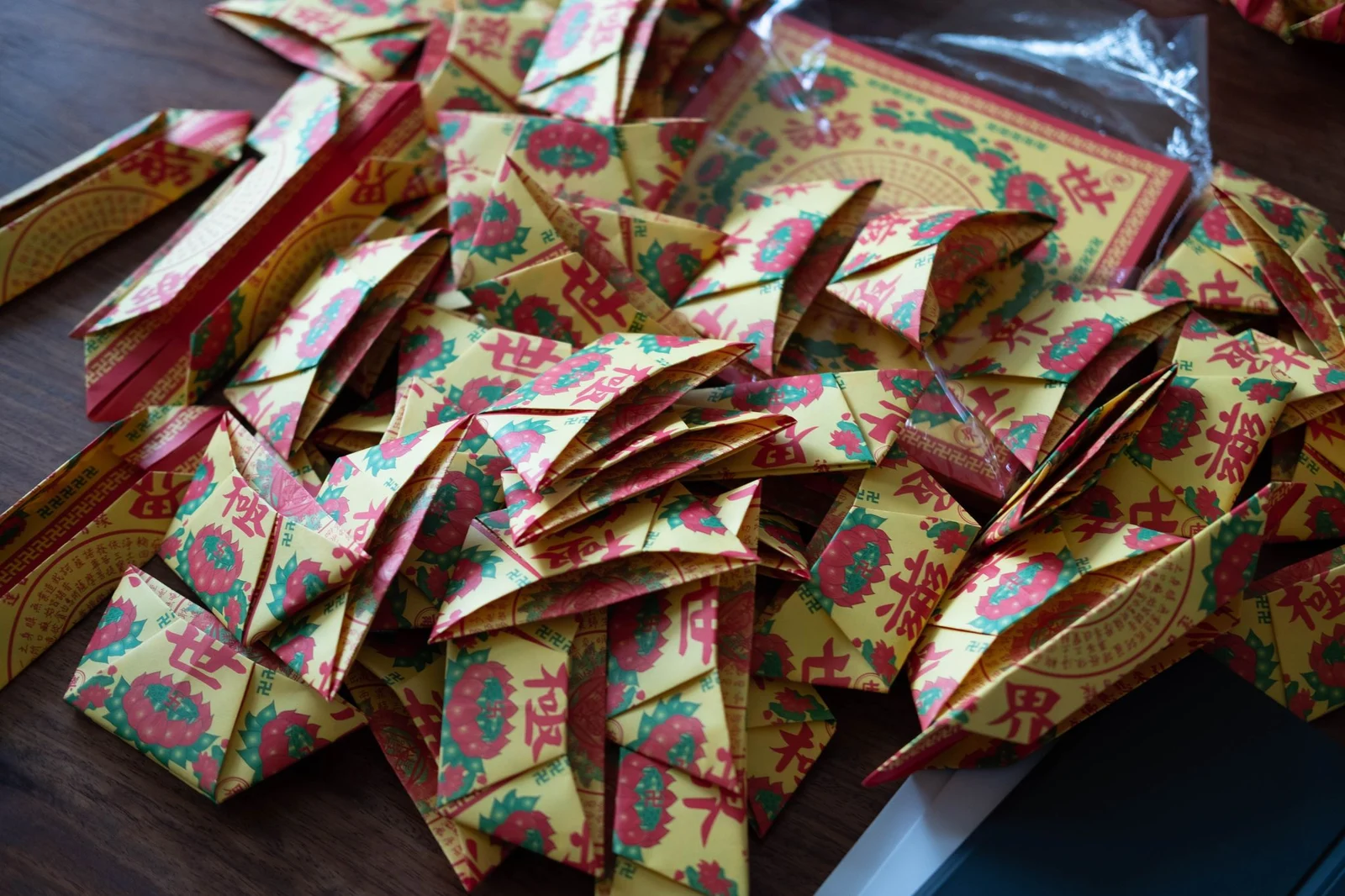
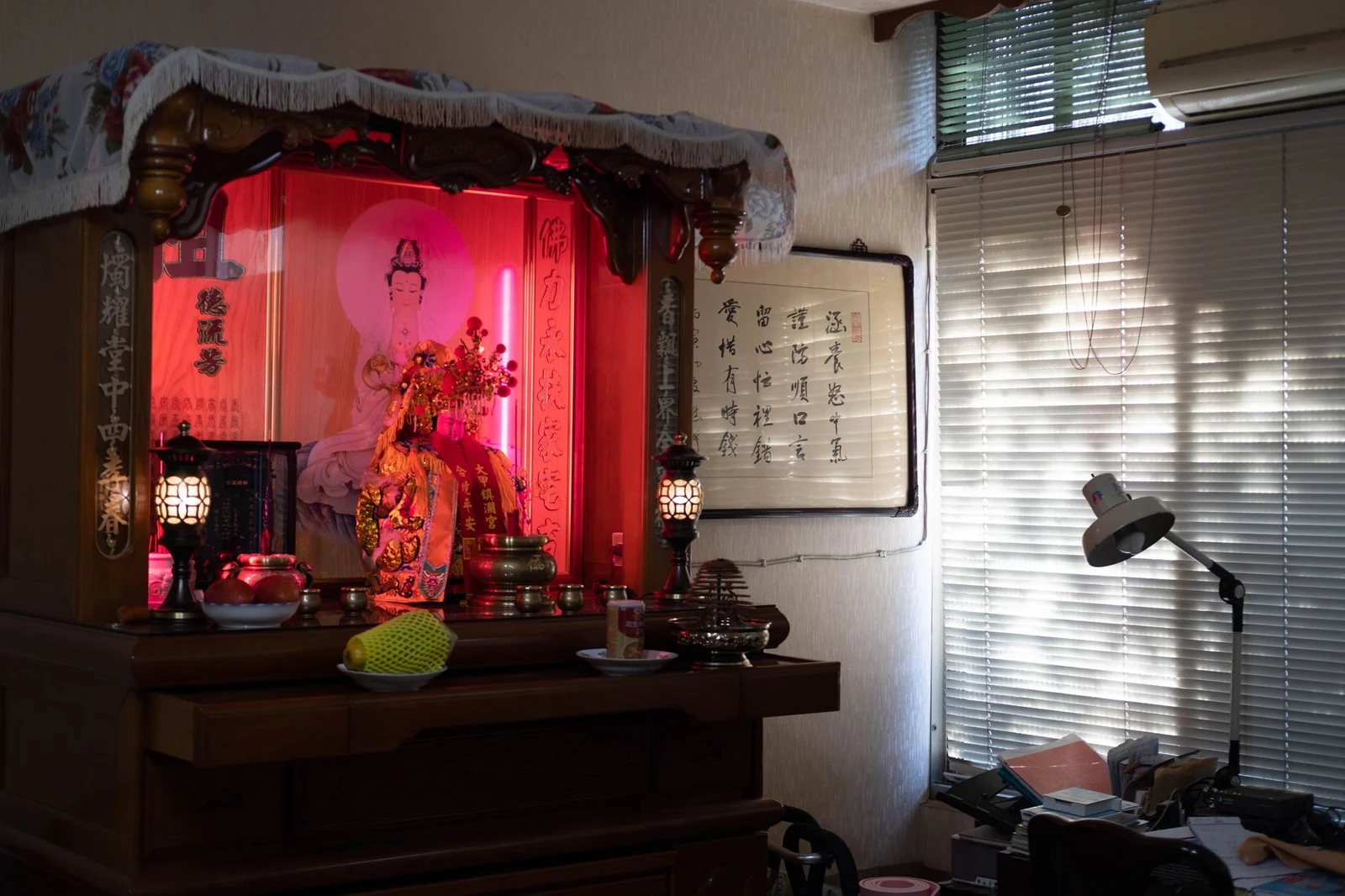
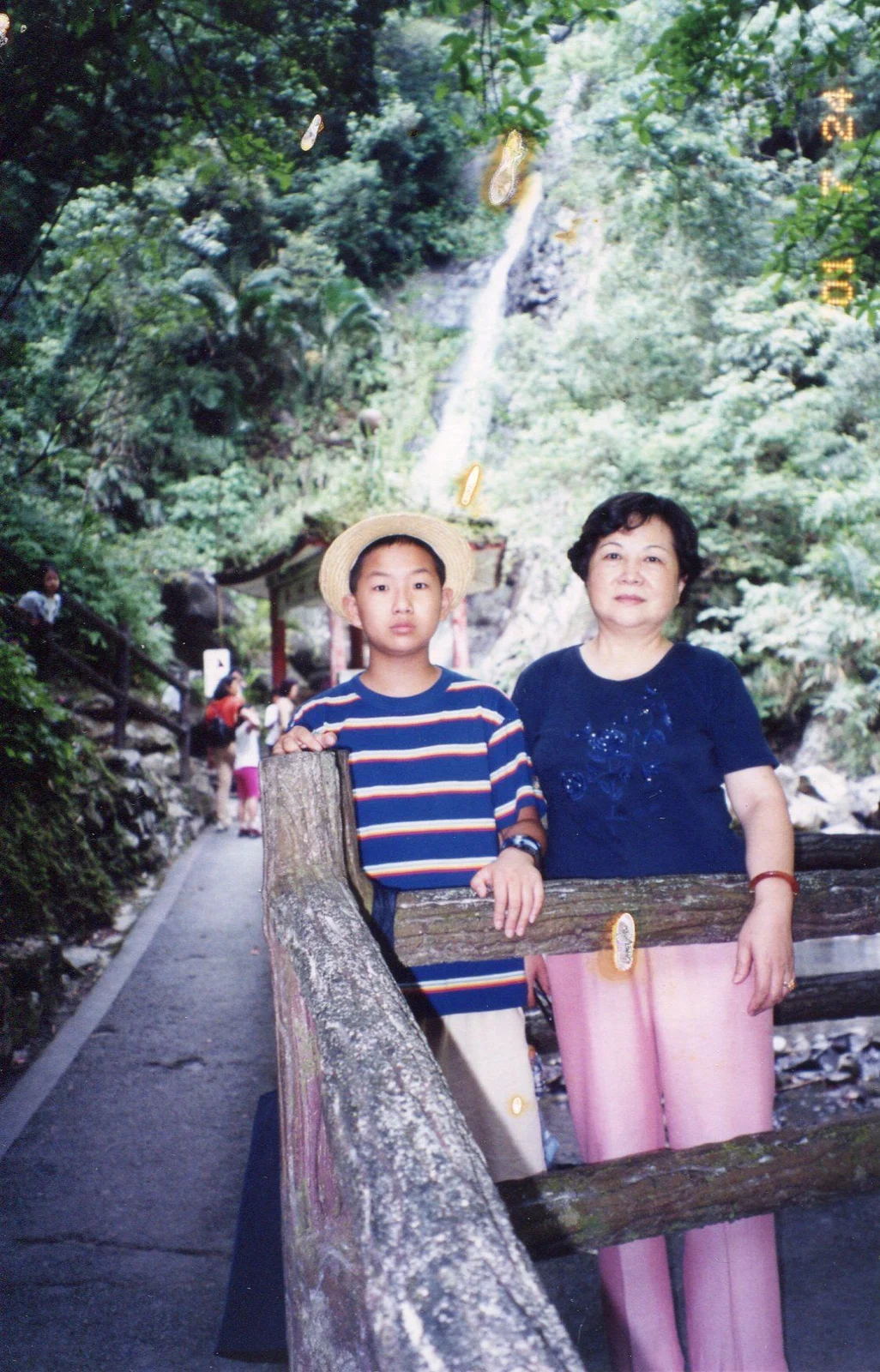
Qingtian Street (Summer)
On the morning of May 14, 2021, my phone's alarm went off, and two messages were waiting on the screen. The first was from a friend, congratulating me on the photography prize I had won at the National Art Exhibition. The second came from my mother's family group chat: my grandmother had died, on Qingtian Street, in Taipei.
Still half-asleep, I read my friend's message; then the death of my grandmother, my mother's mother, woke me. I went through the notifications again, more carefully, and found two missed calls from my mother. I called her back at once. When she picked up, she asked me to go to my grandfather's house in Dajia and find a photograph of my grandmother to use as her memorial portrait. The moment we hung up, I got up, pulled on a jacket, and set off. At the house I started going through the drawers; the wooden drawers grated at the edges as they slid out, stirring up the smell of mildewed wood inside. Negatives, CDs, printed headshots—sorted into little paper sleeves stamped with the names of photo shops. I tipped them out one by one, bringing my grandparents—yellowed or black-and-white—close to my eyes and setting them back again. My phone kept vibrating; the congratulations on the prize would have to wait. At last, in a small sleeve done in Kodak's standard yellow, red, and black, I found a CD: on its cover, the file for my grandparents' golden-wedding portrait, my grandmother in it full-cheeked and radiant. I rephotographed it and sent it to my mother, who thought it was just right. So I took the CD to the shop whose name was printed on the sleeve and had them pull the file off the disc and email it to my mother.
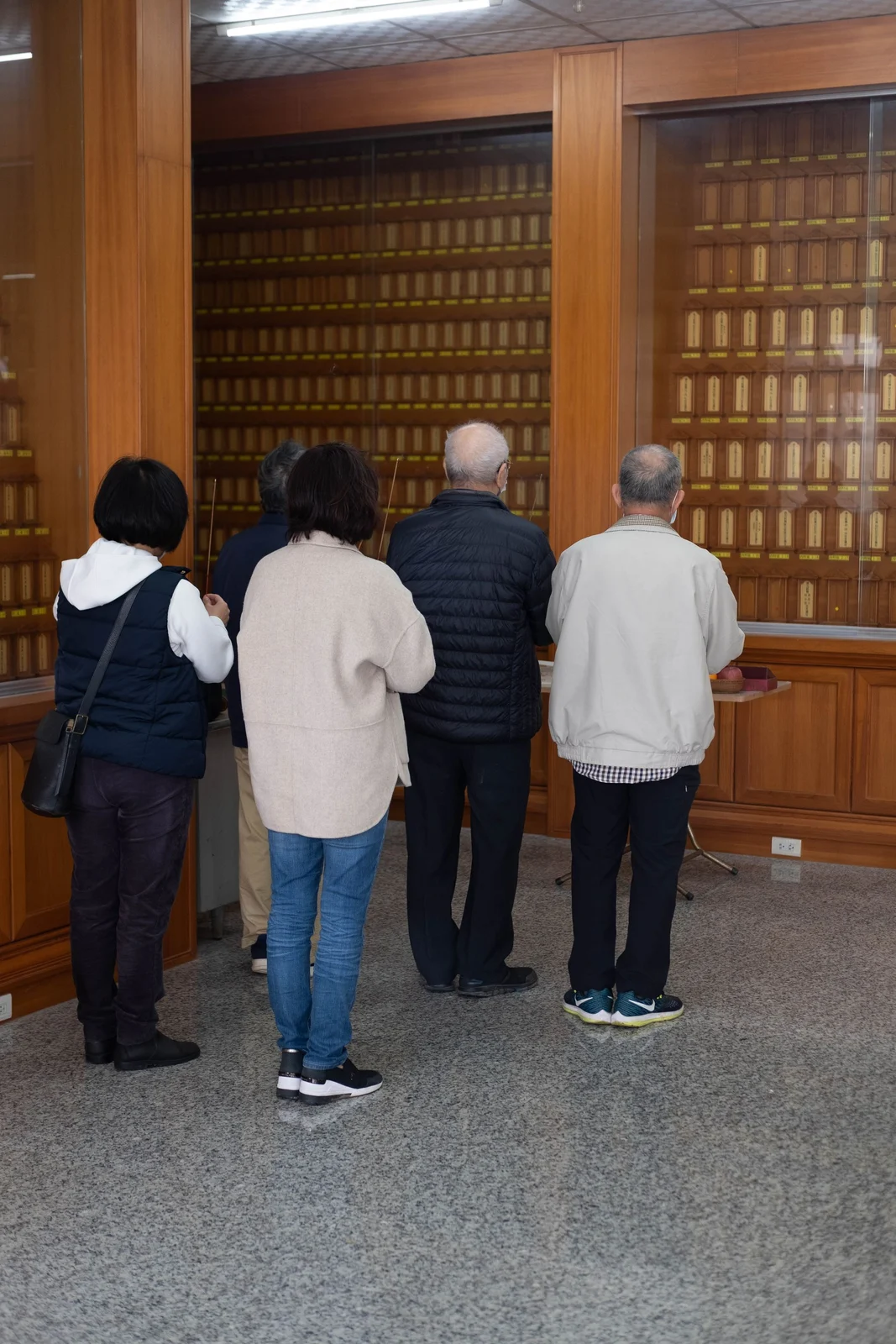
The next day my mother, my sister, and I set out from Dajia for Taipei to mourn my grandmother. As we headed north on National Freeway 3, the first thing we passed was Tiezhen Mountain; the old residence of my grandfather's family stands at its foot. For most of the two-hour drive we hardly spoke, except for my mother describing how my grandmother had been before she died. As we passed Chongqing North Road, rain came down over Taipei all at once; we left the highway and reached the Lung Yen Taipei Hall on Minquan East Road. After we had offered incense, I went back with my grandfather's family to their home on Qingtian Street, and my aunt said to me: "From now on, if you ever need a place to stay in Taipei, stay here."
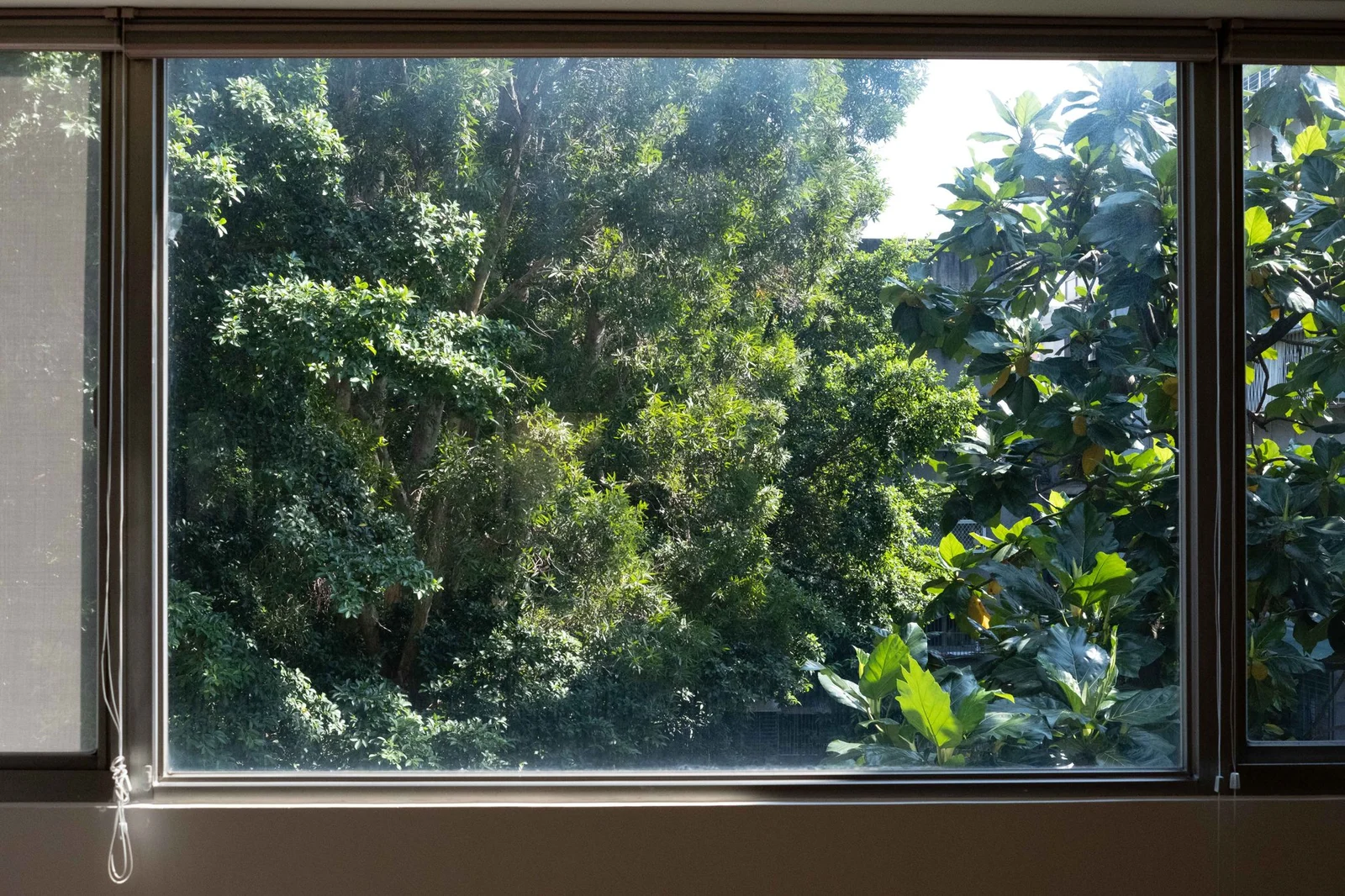
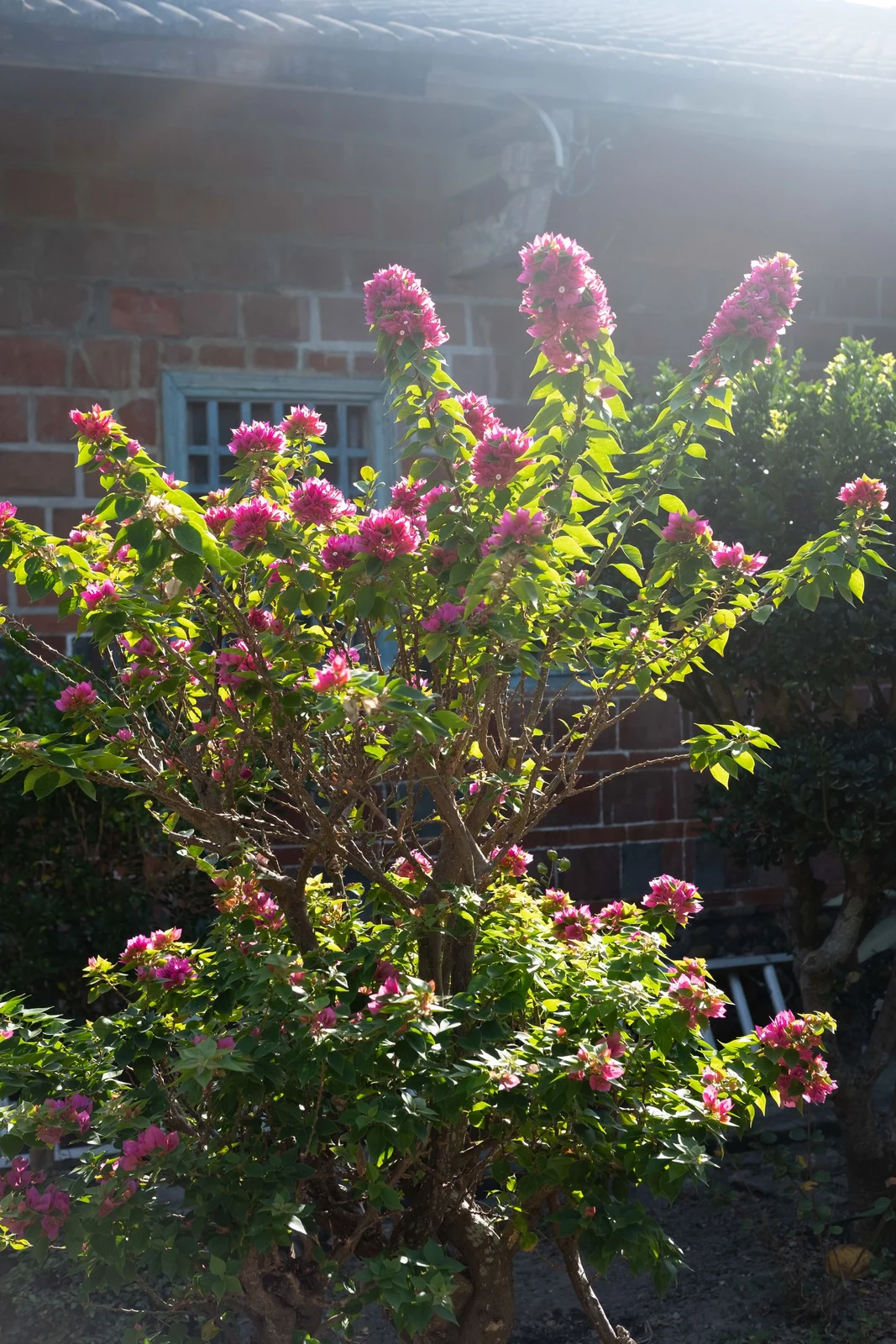
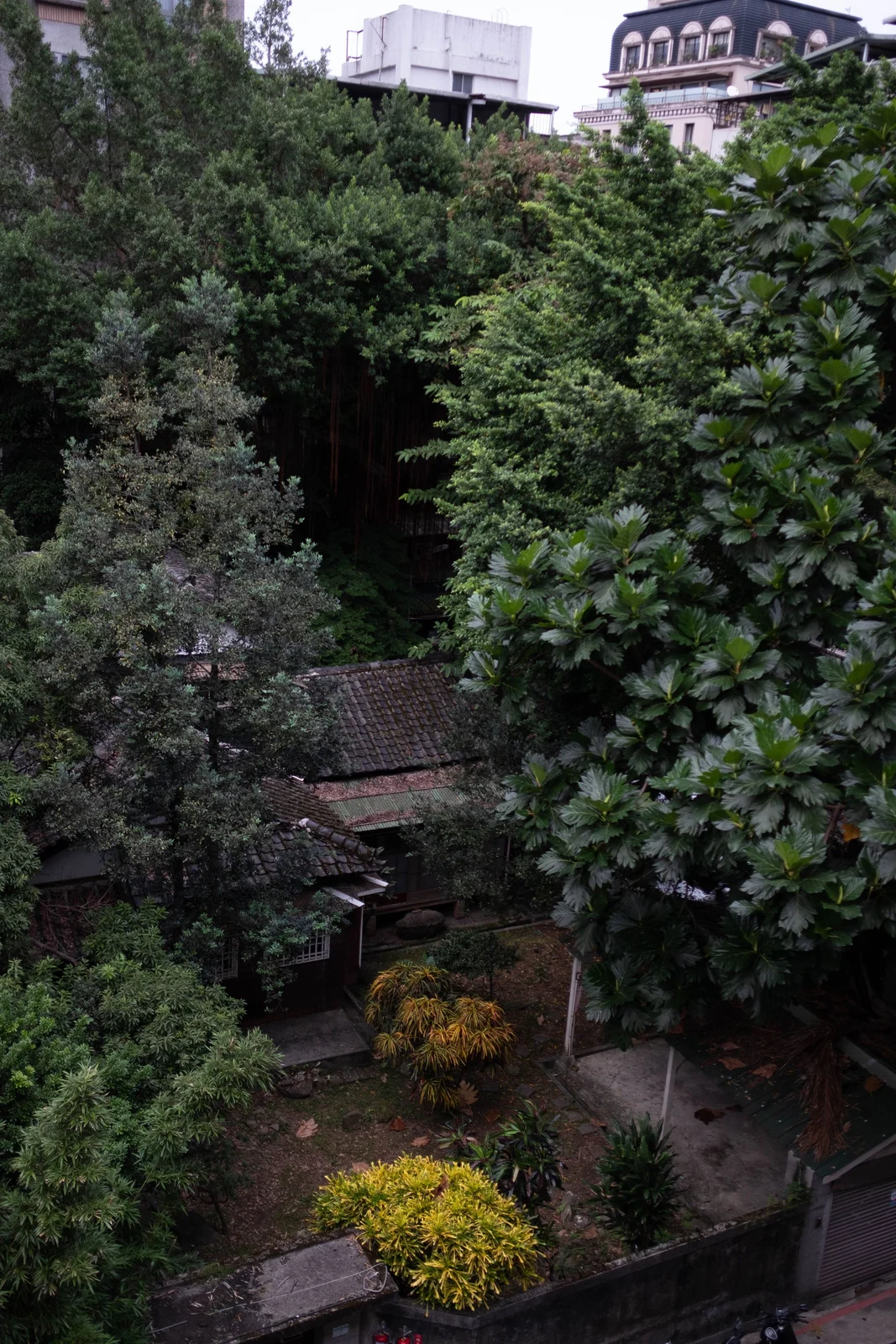
That summer, after my grandmother had gone off following Mazu on her long journey, the apartment on Qingtian Street became my temporary home in Taipei. I stayed there from July to August, during my solo show in the city. In that time I noticed that, in that season, from the apartment's window I could watch the fierce sunlight pour over the leaves of the breadfruit tree, their edges rimmed with a halo of light, swaying and glinting to the rhythm of the wind. Outside, the wind brought down the blue-green leaves of the silk tree; the longer they lay there, the further the fading leaves parted from their veins, and then turned yellow. After the rain on a summer night, these yellow fragments clung to the cars in the parking bays along the street. Through the morning the sunlight over Qingtian Street grew stronger and stronger, until it blazed and baked dry the moisture that had gathered all night. Those leaves, gone from green to yellow, dropped from the cars to the ground and glinted in the sun.
To this day I still miss that time on Qingtian Street.
The Great-Grand-Aunt (Autumn)
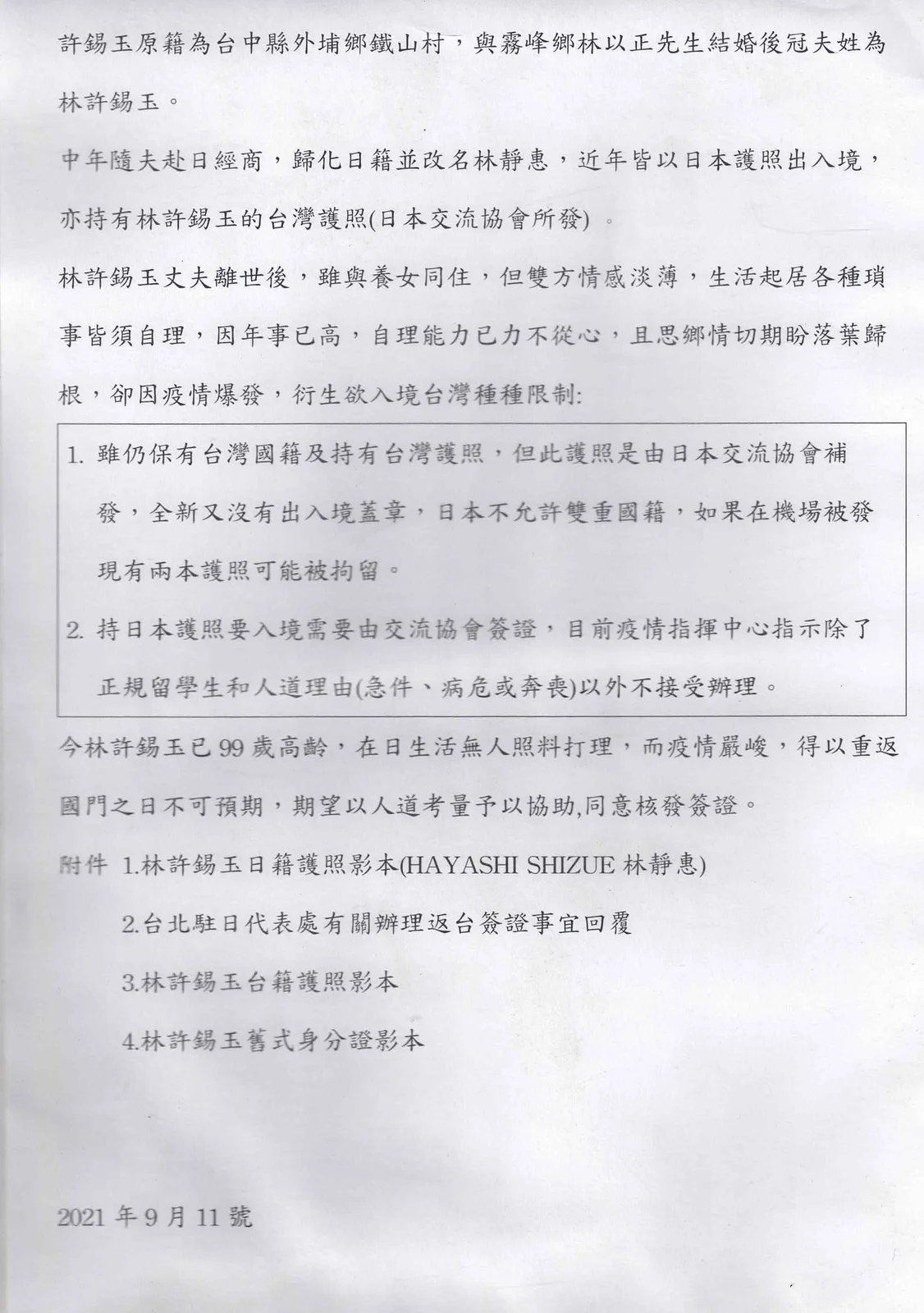
After my 2021 solo show closed I moved out of Qingtian Street; it was the height of late-August heat. That autumn, the next person to move in after me was my great-grandfather's younger sister, Hsu Hsi-Yu, whom I should call my great-grand-aunt. When she came back to Taiwan from Japan at the end of '21, she was already ninety-nine.
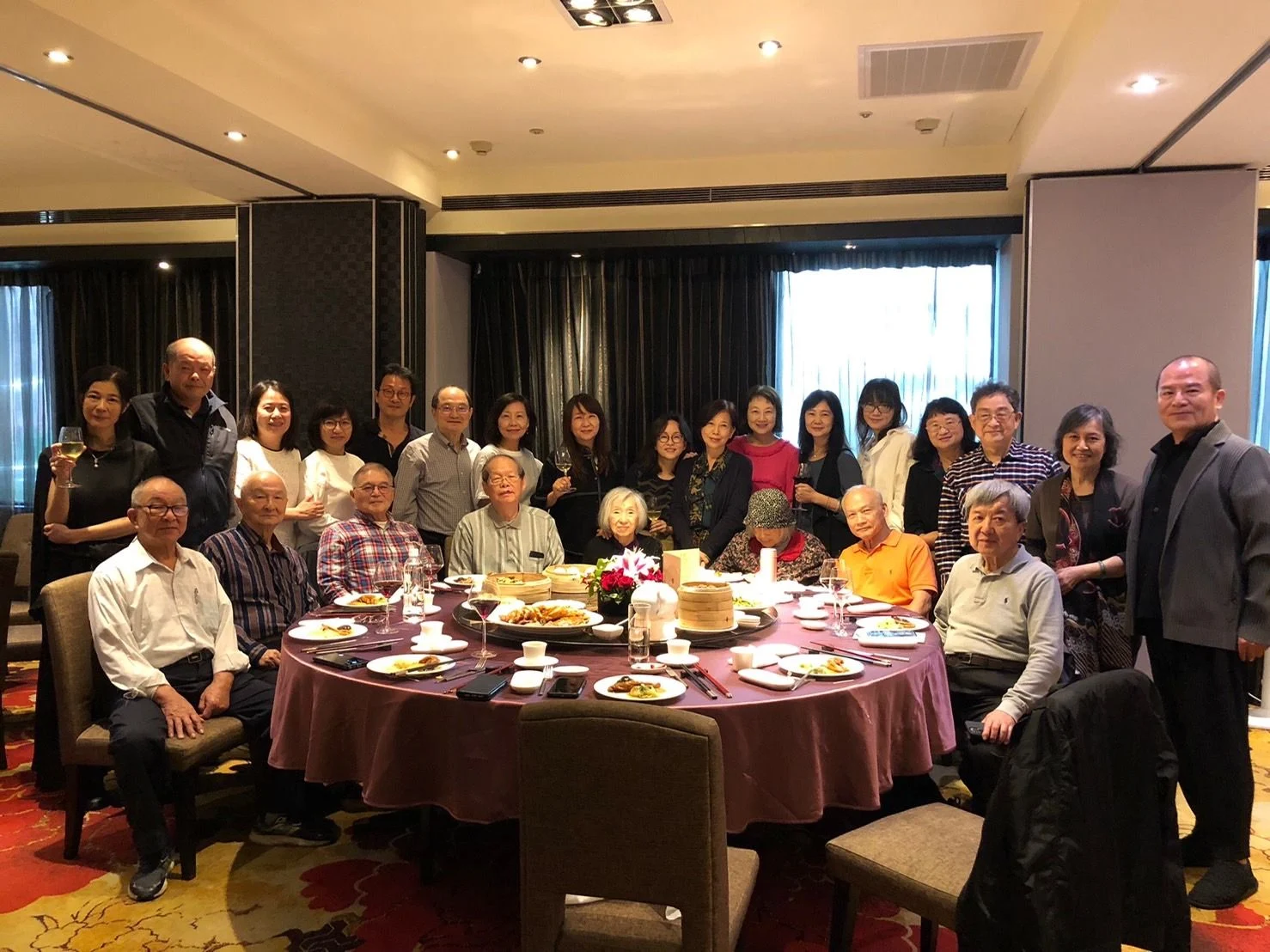
I had often glimpsed the great-grand-aunt in the Hsu family's old photographs; I have seen pictures of her from childhood right up to her final days. In them she is always elegant and lovely, and again and again she appears caring for someone—an elder, or one of the young.
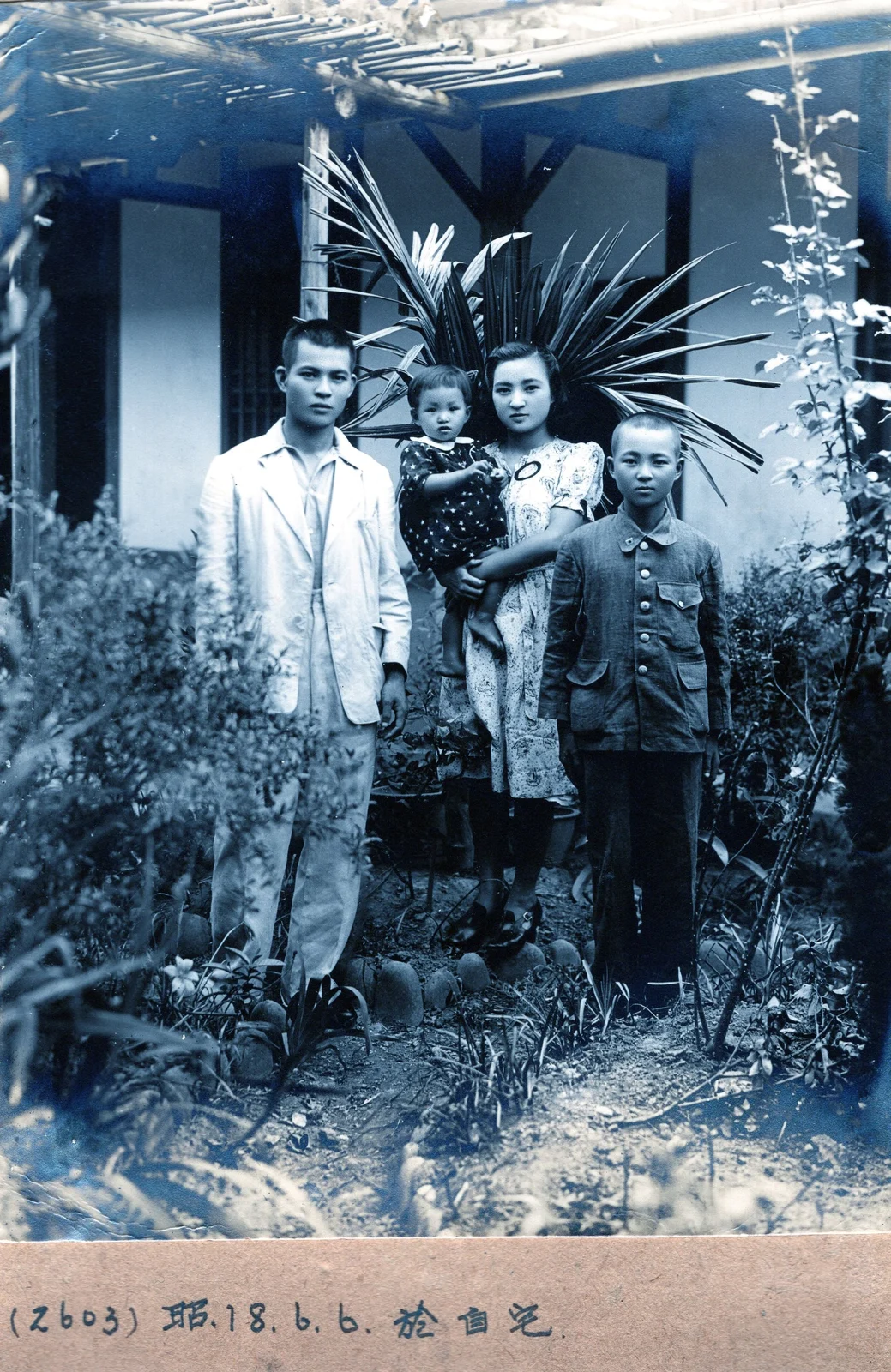
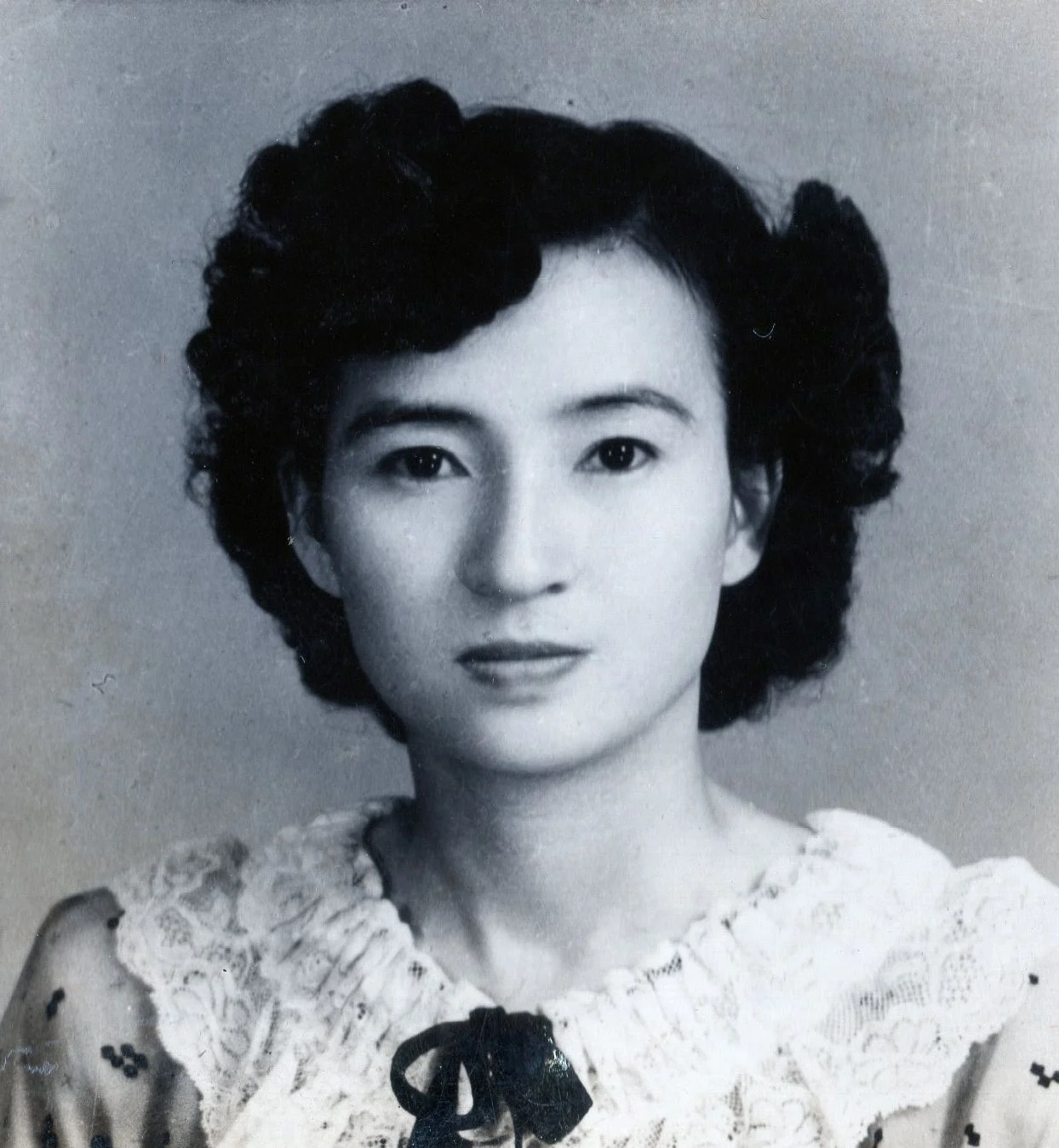
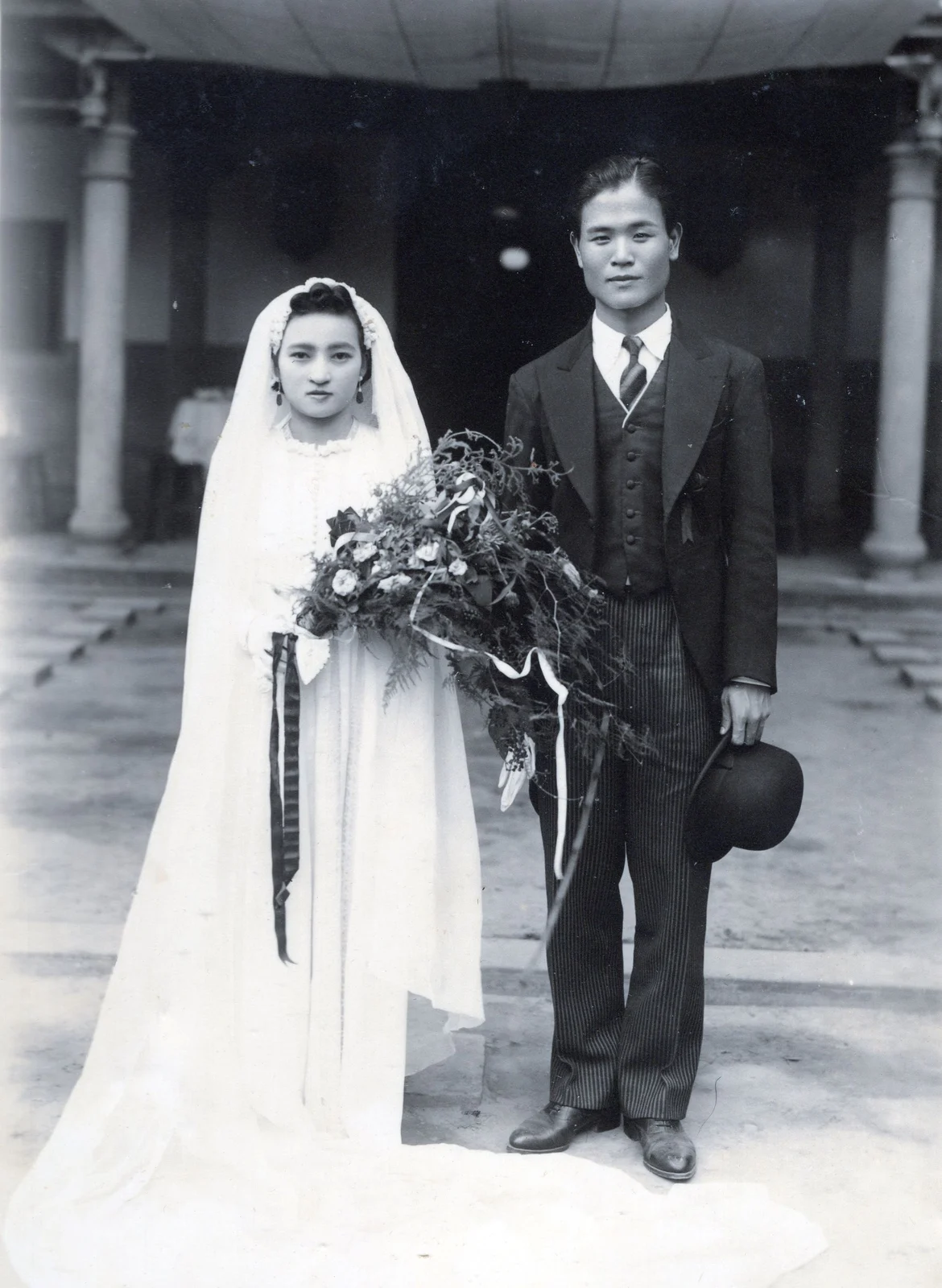
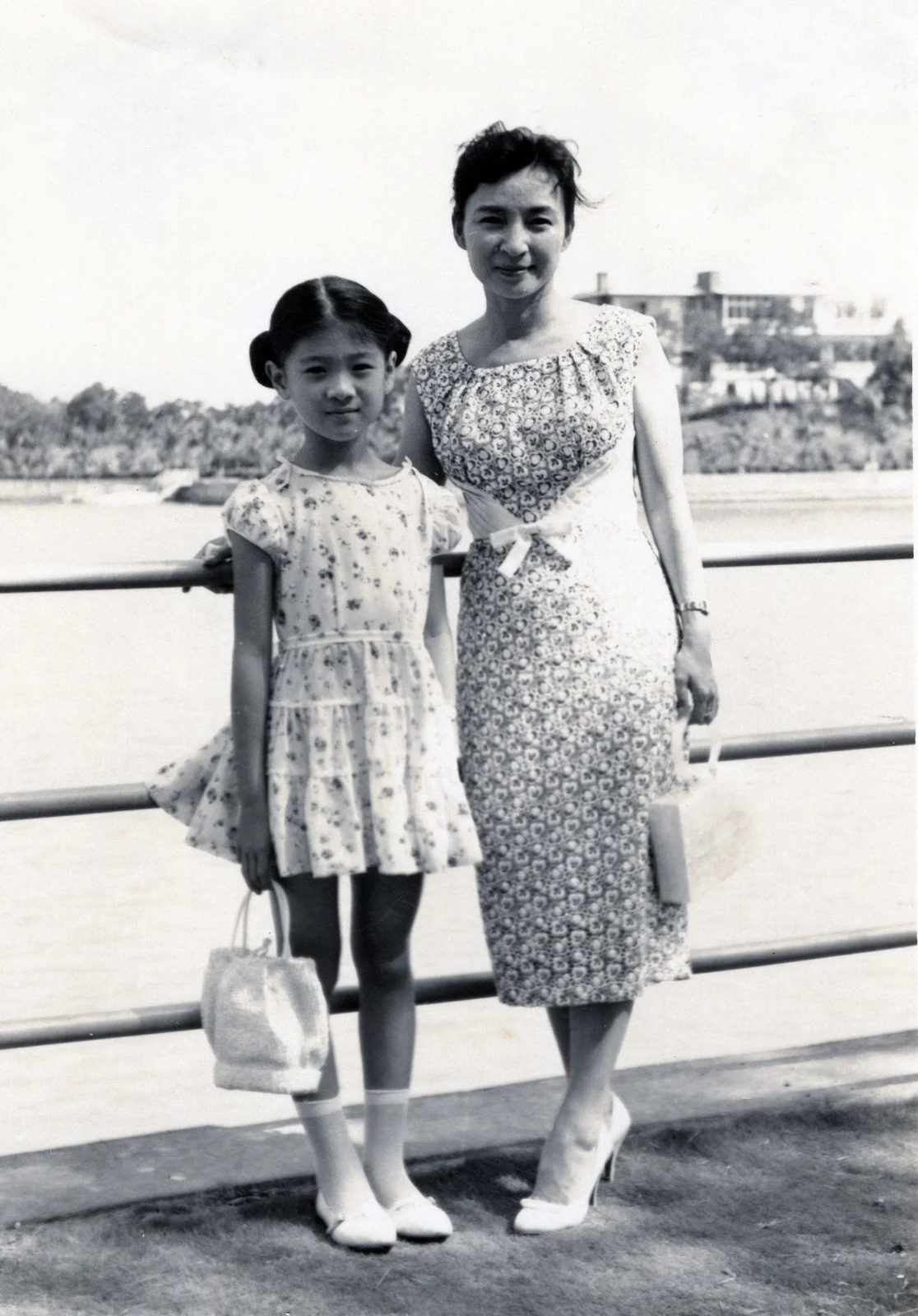
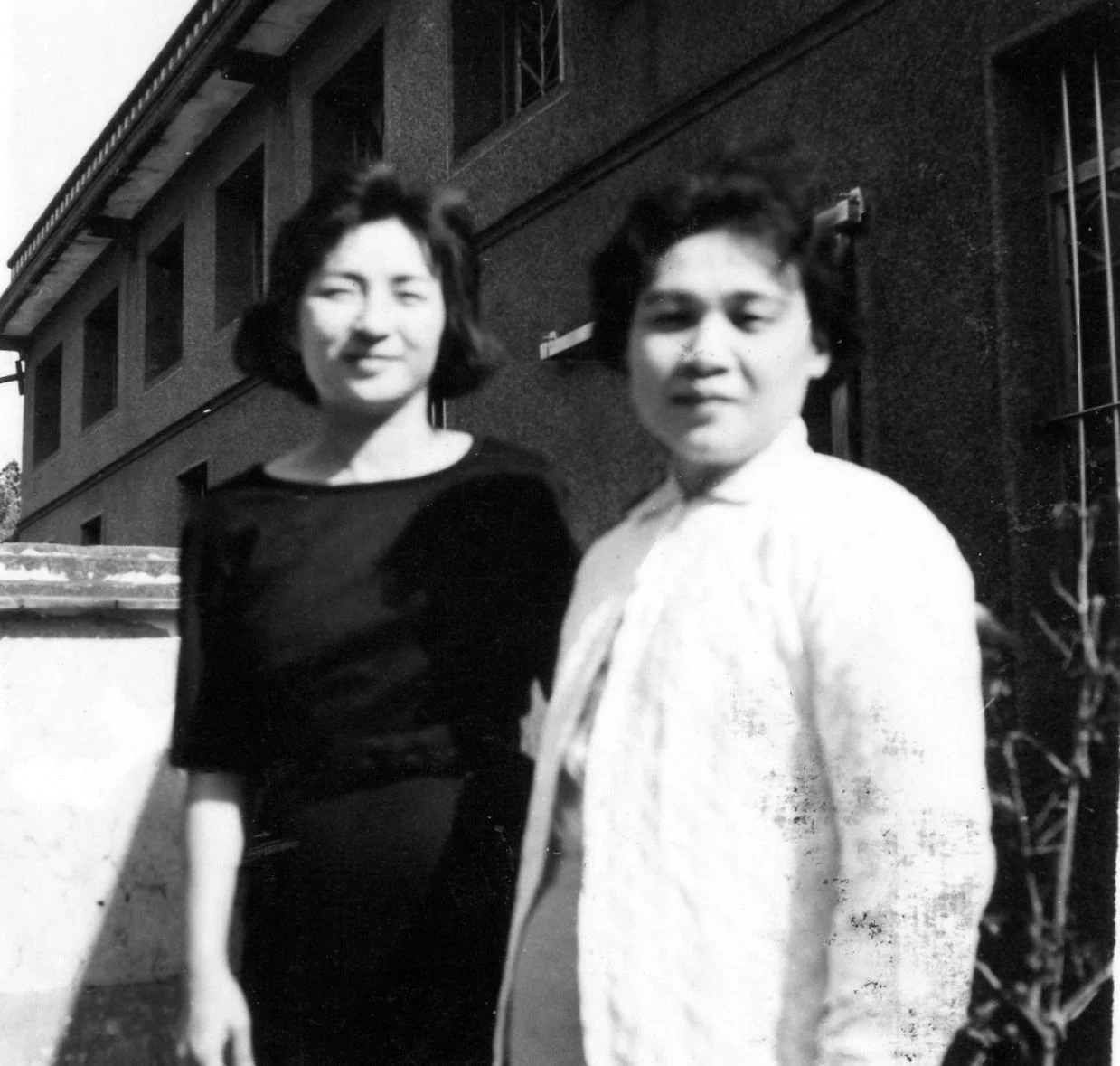
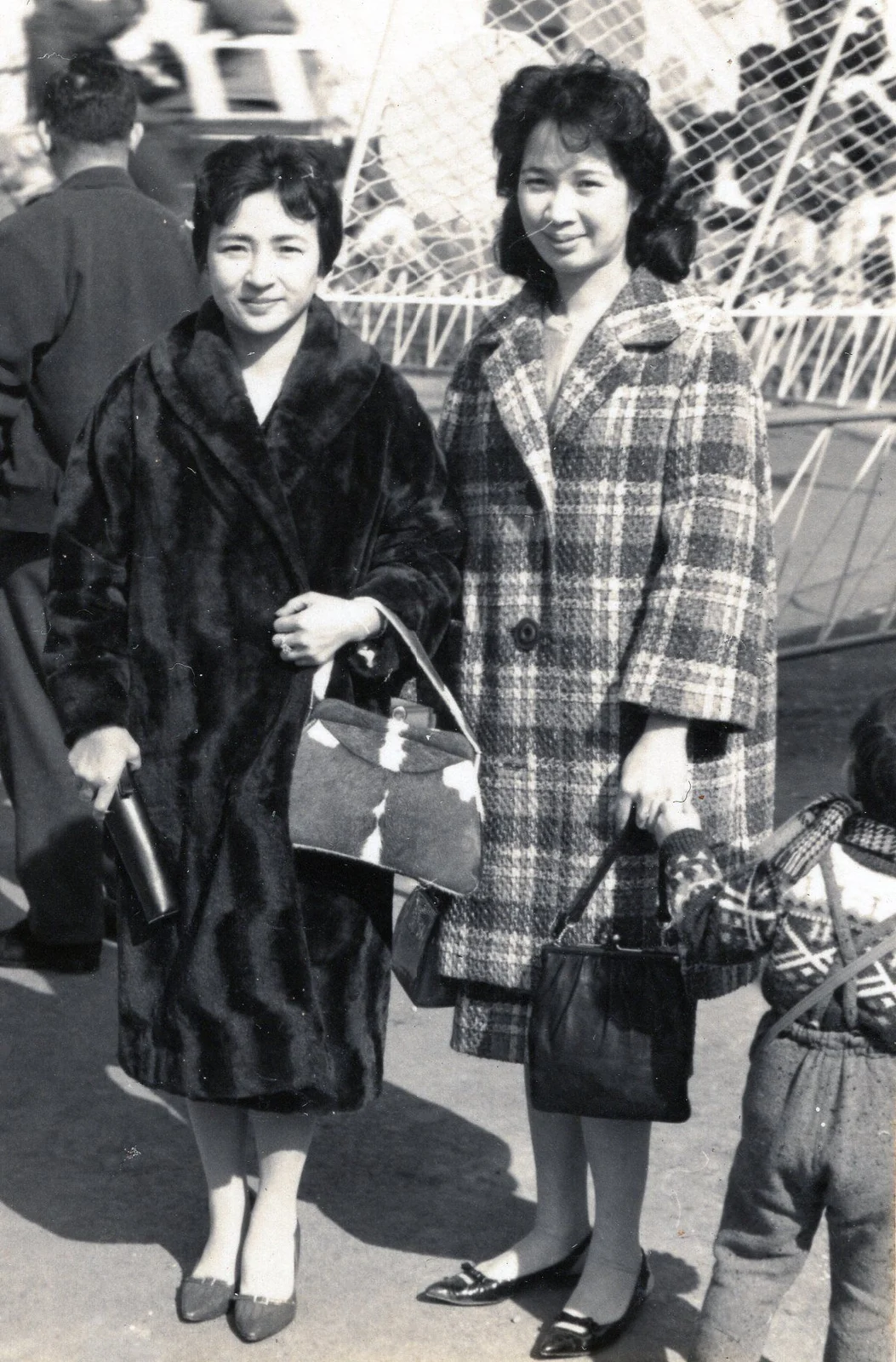
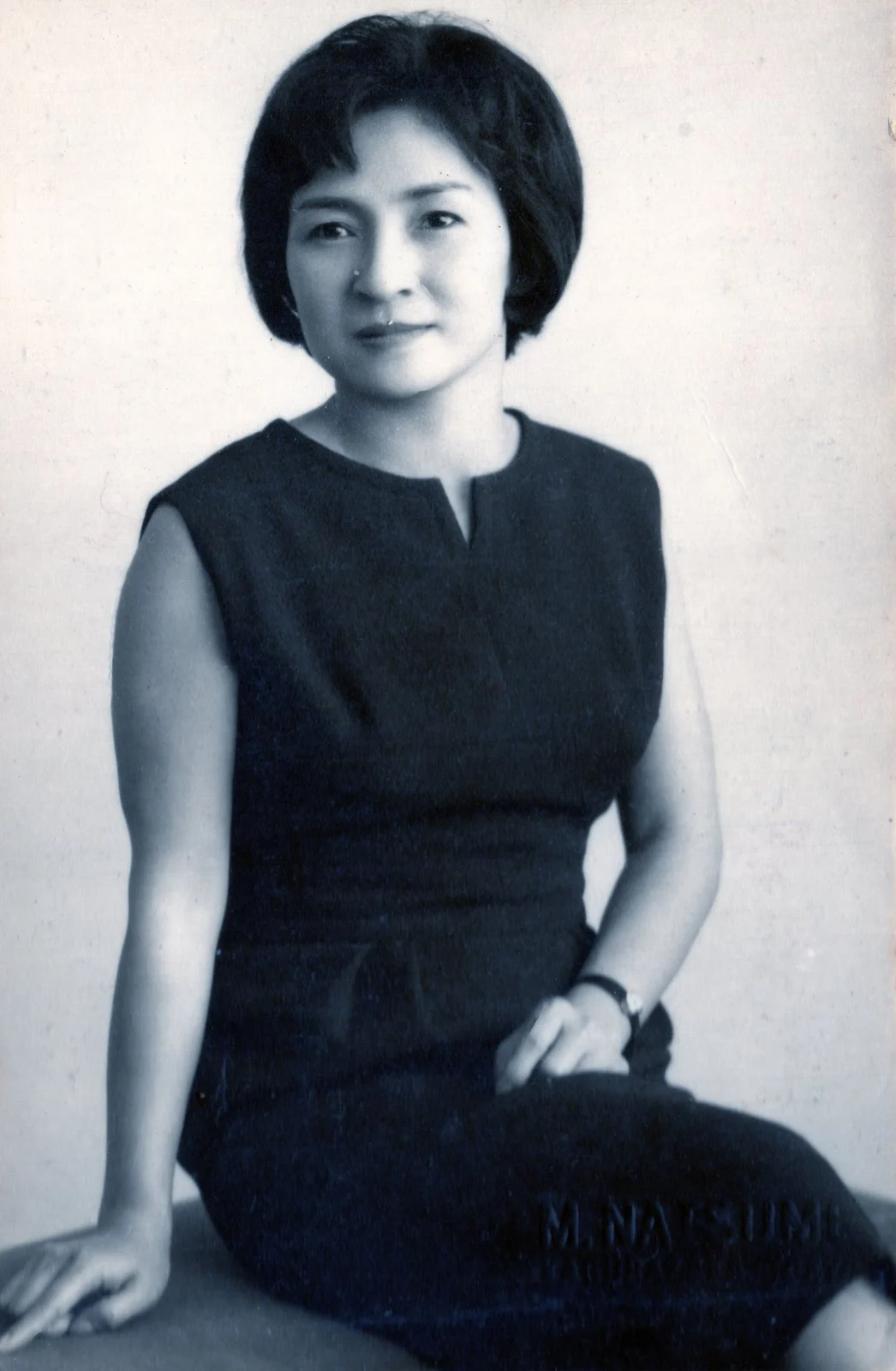
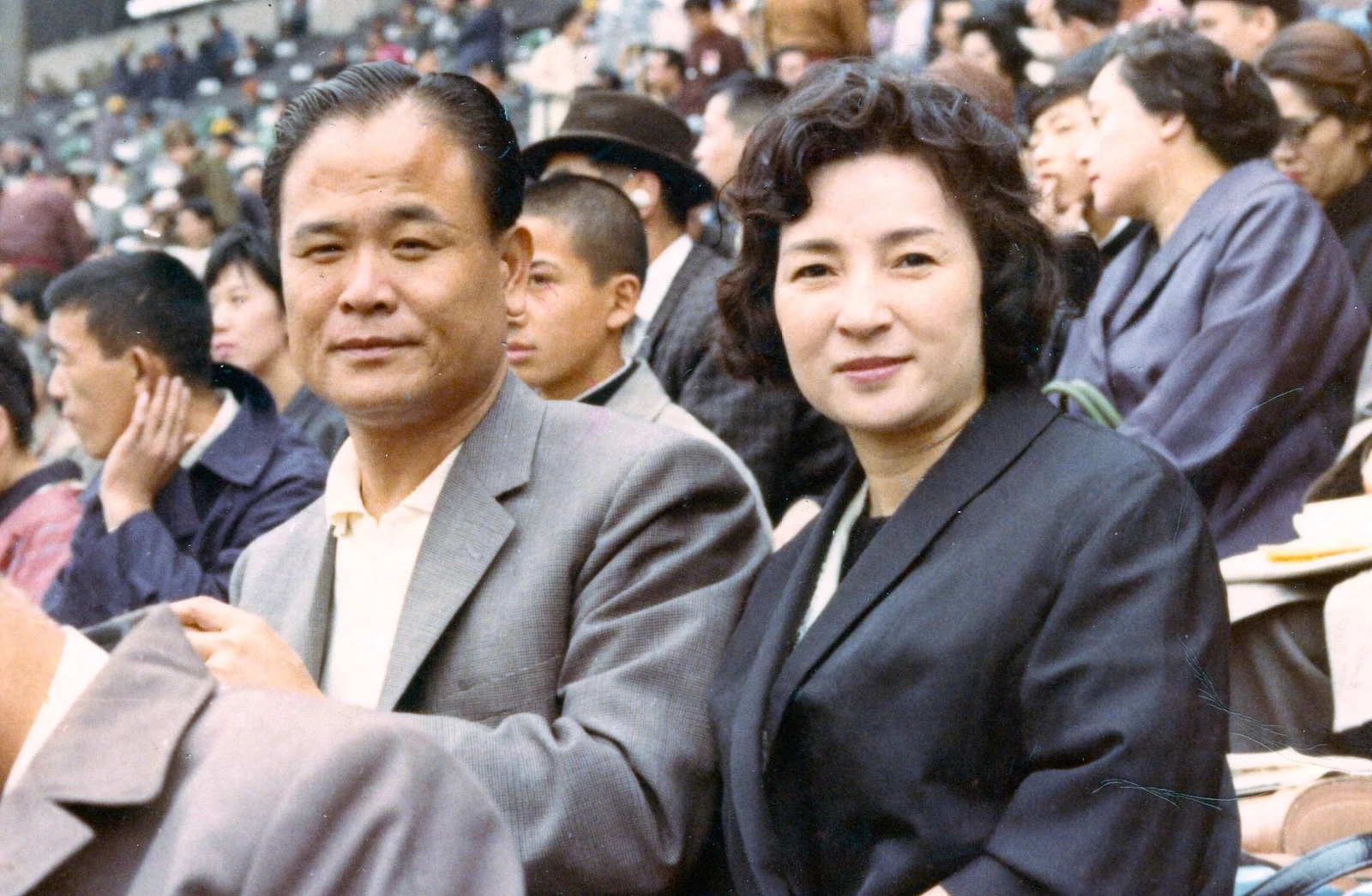
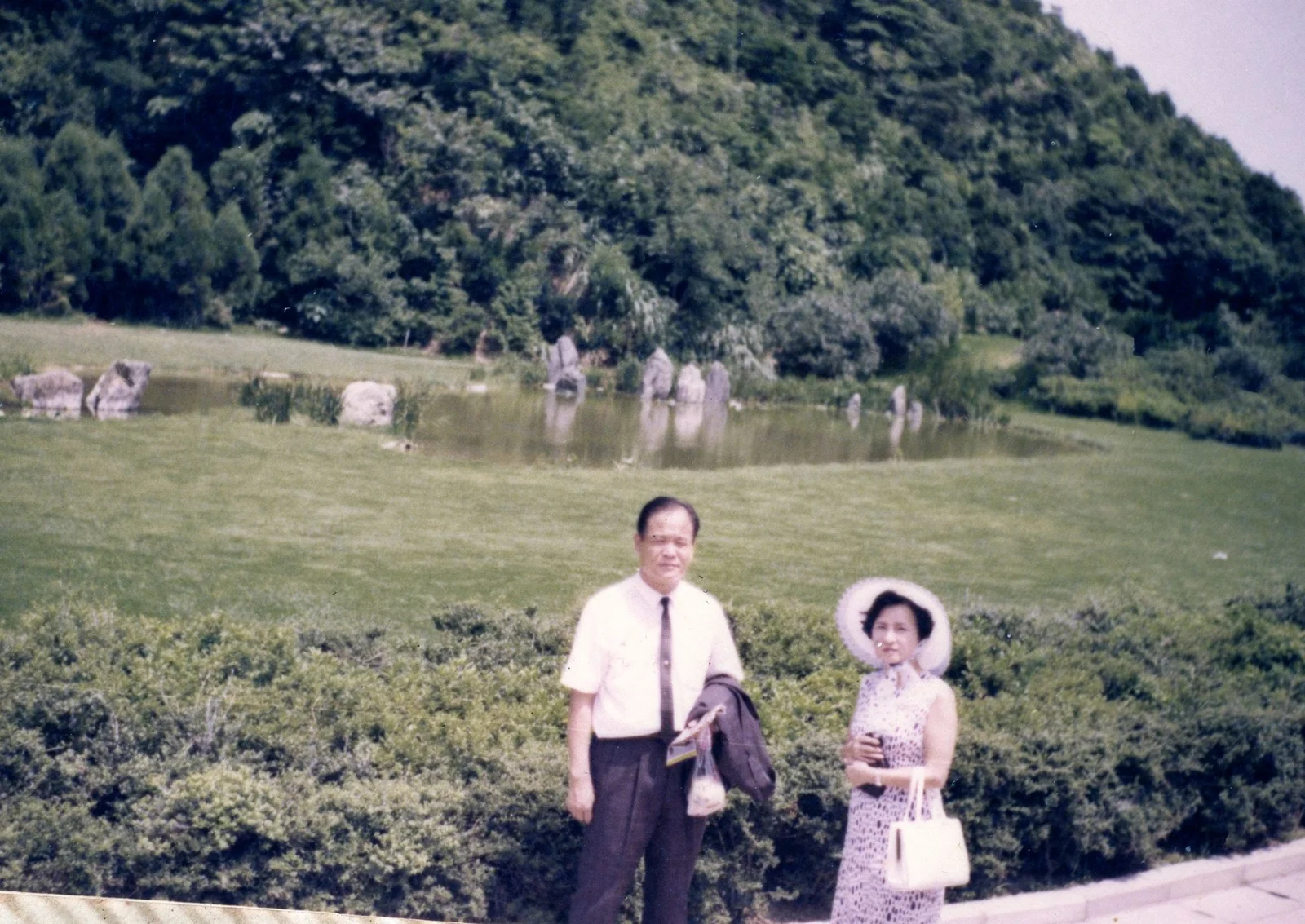
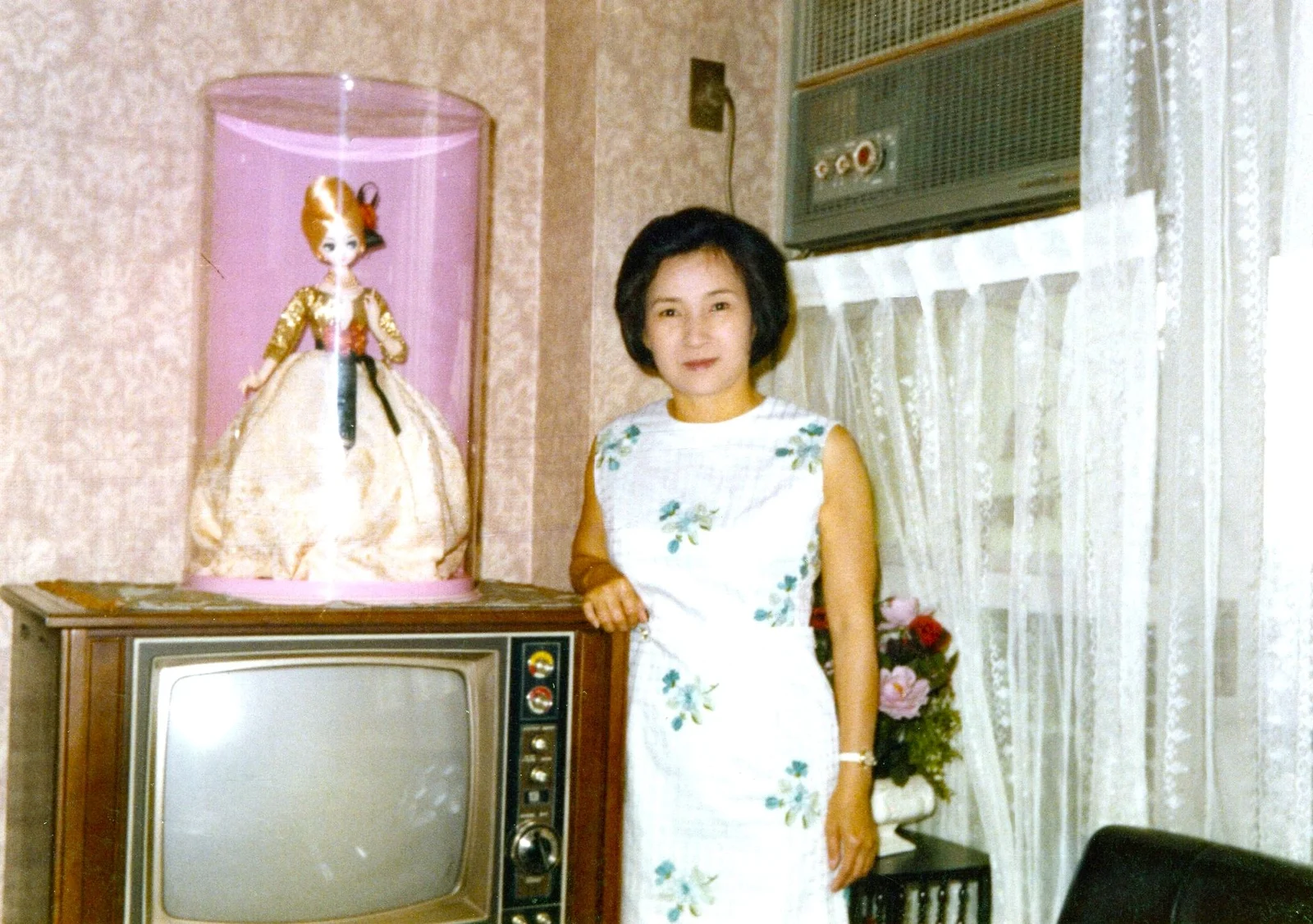
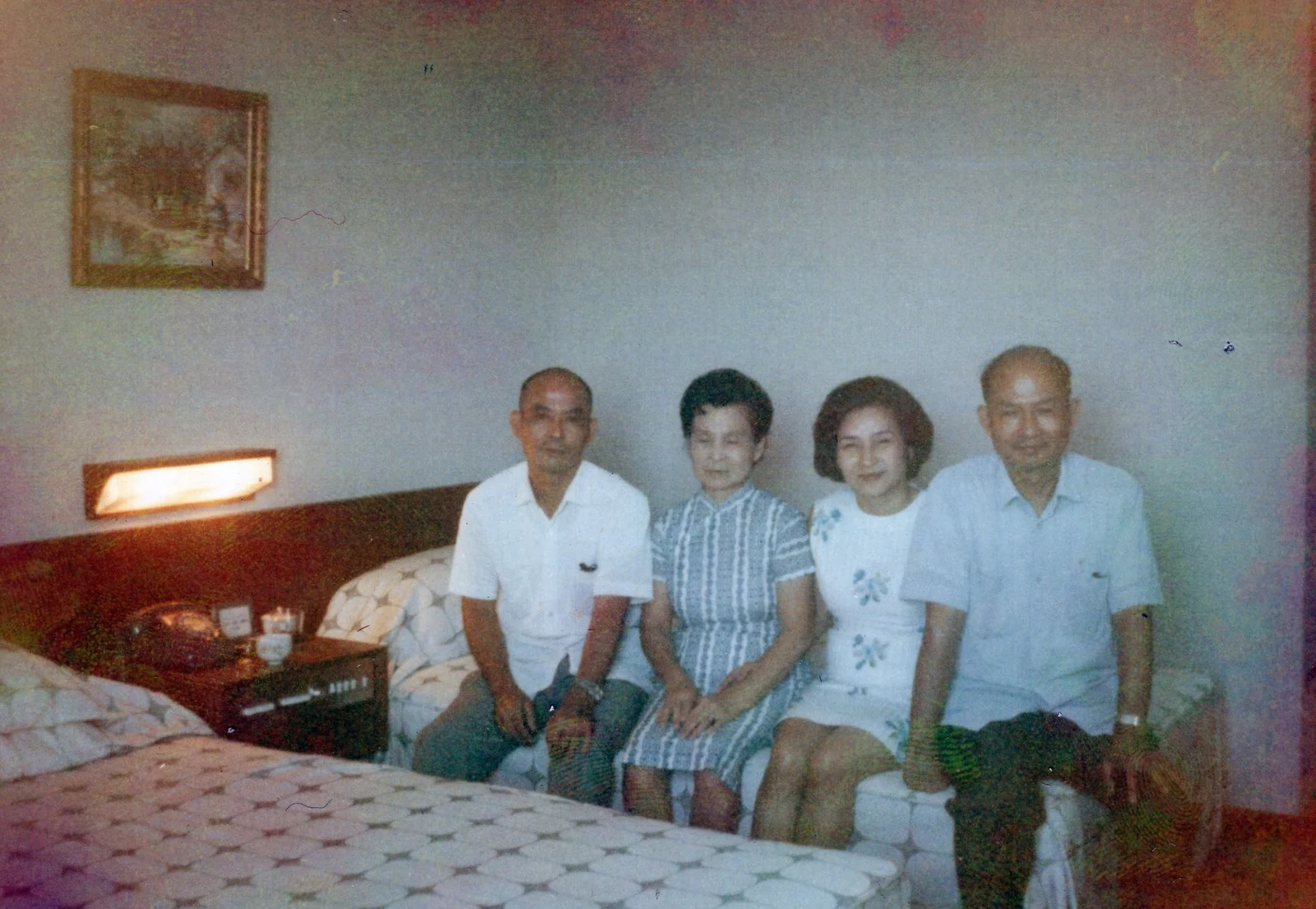
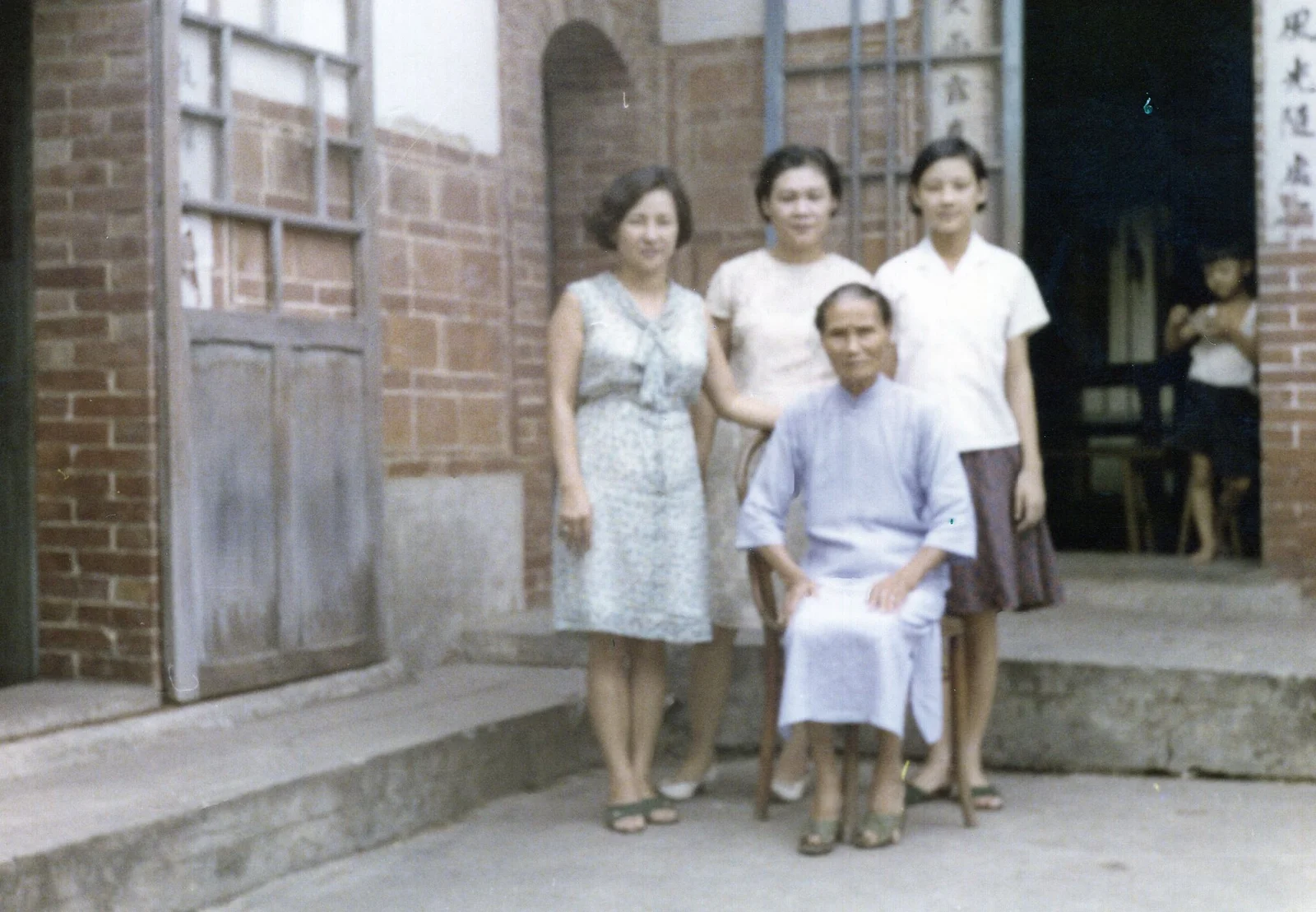
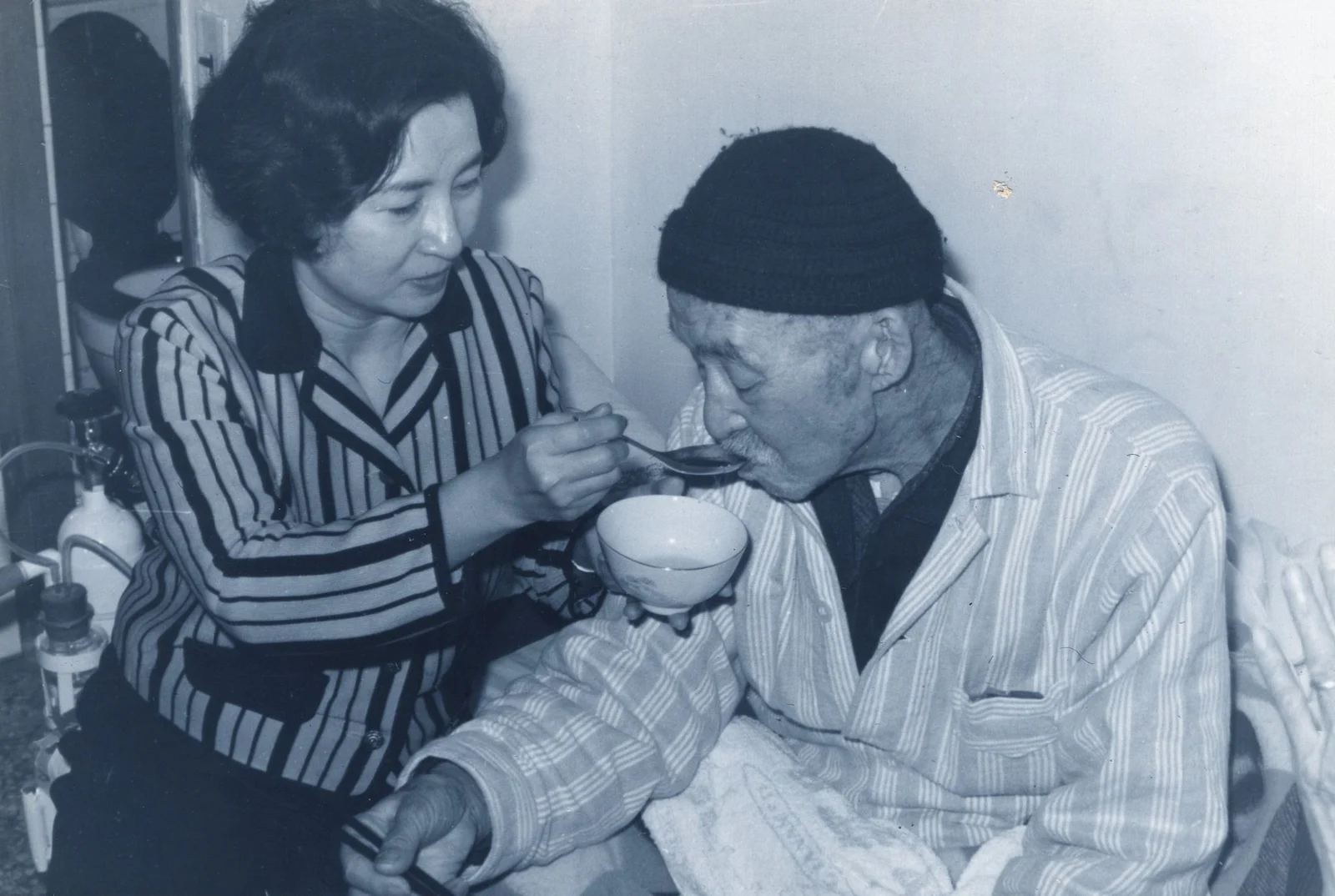
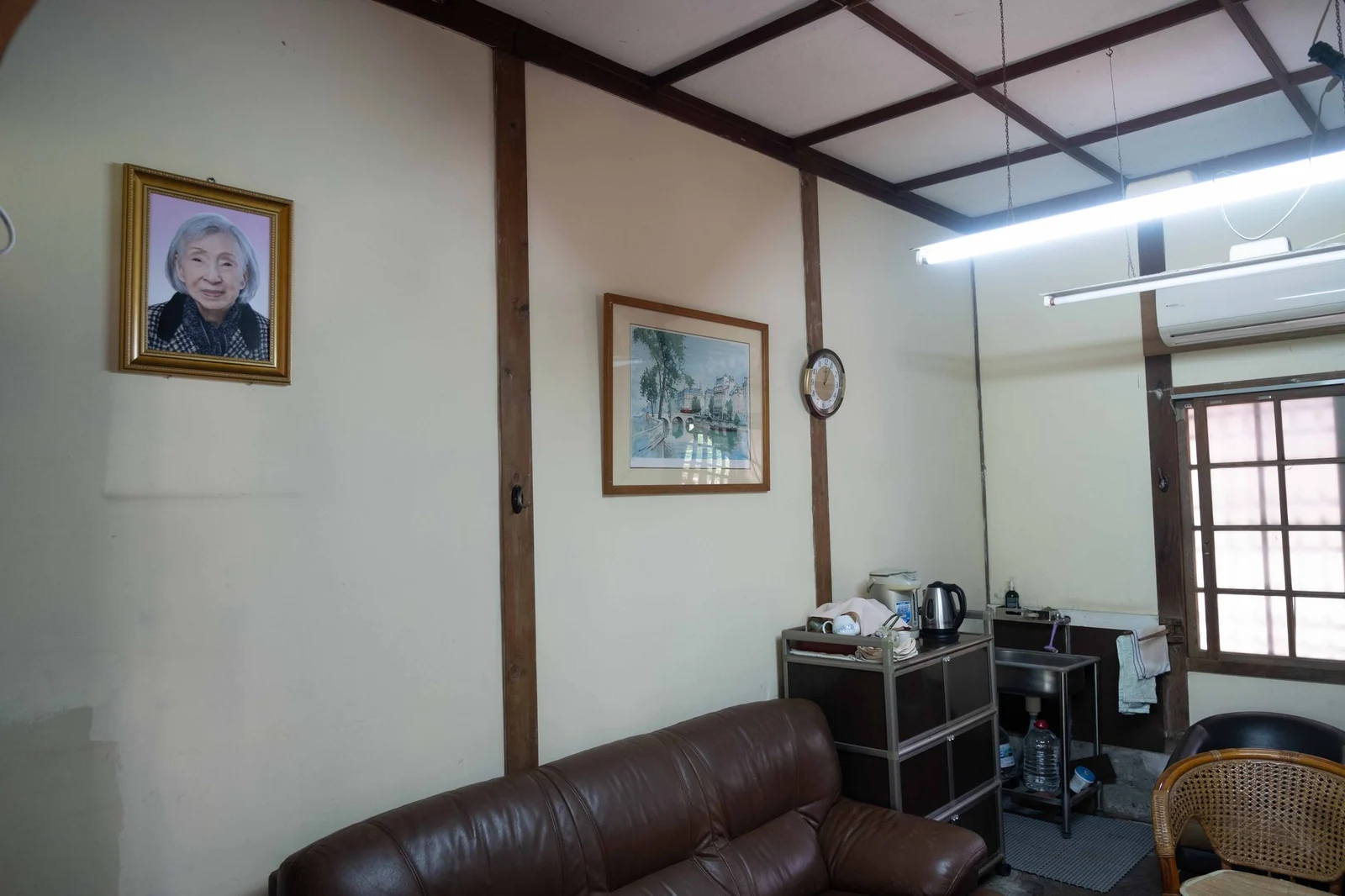
Two months after her return, the great-grand-aunt died, the day after she met the prophet. It was winter in Taipei when she died, yet warmer than Tokyo was then. I had never met the great-grand-aunt, and so the apartment on Qingtian Street became the last link between me, my grandmother, and her.
The Prophet (Winter)
The next exhibition after my summer '21 solo show was the One Art Taipei art fair, in early '22. The day before the preview, I drove from Taichung to Taipei to install the work. The Taipei basin lay in the grip of a cold snap, the cold bringing wind and rain, and there were few people on the streets. At half past seven that evening, once the installation was done, I went to a building on Linsen North Road to see a "prophet"—my aunt had told me to go. After the meeting I would drive back to Taichung. The building was about twenty stories high; looking up, I saw the plants on the balconies veiled in moisture by the night's misty rain, their leaves flickering on and off with the neon of Linsen North Road. I went in through the front door alongside a girl in Minnie Mouse pajamas, on her way down to pick up a delivery. After signing the visitors' book, I walked along the corridor into the lobby, sat down on the sofa by the elevator, and messaged my aunt, asking her to tell the prophet I had arrived.
As I waited on the sofa, I noticed a round table draped in bright red satin. The tabletop was not large, yet on it stood a flower arrangement that nearly reached the ceiling, the pot ringed with gold ingots and firecrackers printed with the golden character for fortune. Warm spotlights on the ceiling lit the table, and the interlacing gold and red threw the light back in a festive glow. The New Year is coming, I thought. Twenty minutes later a woman in a Buzz Lightyear hoodie stepped out of the elevator; she was the prophet's assistant. She came over and said the prophet was still busy, and asked me to wait a little longer.
Another fifteen minutes passed before the elevator doors opened again, and this time a stylishly dressed woman stepped out. Her coat still held the warmth of a heated room, and its hem gave off a faint white mist in the cold. She wore gold at her ears and throat, her hair bleached to a pale shade, weightless and carrying a scent of flowers and fruit, as though she had just come from a salon. Catching sight of me, the prophet introduced herself: "Vanessa—but just call me Sajie." I rose from the sofa and we walked together to a public area of the building, where we found a table and sat down. Sajie sat across from me and told me to carry on with whatever I was doing for now. I was a little at a loss, but I had waited this long already; a little longer made no difference.
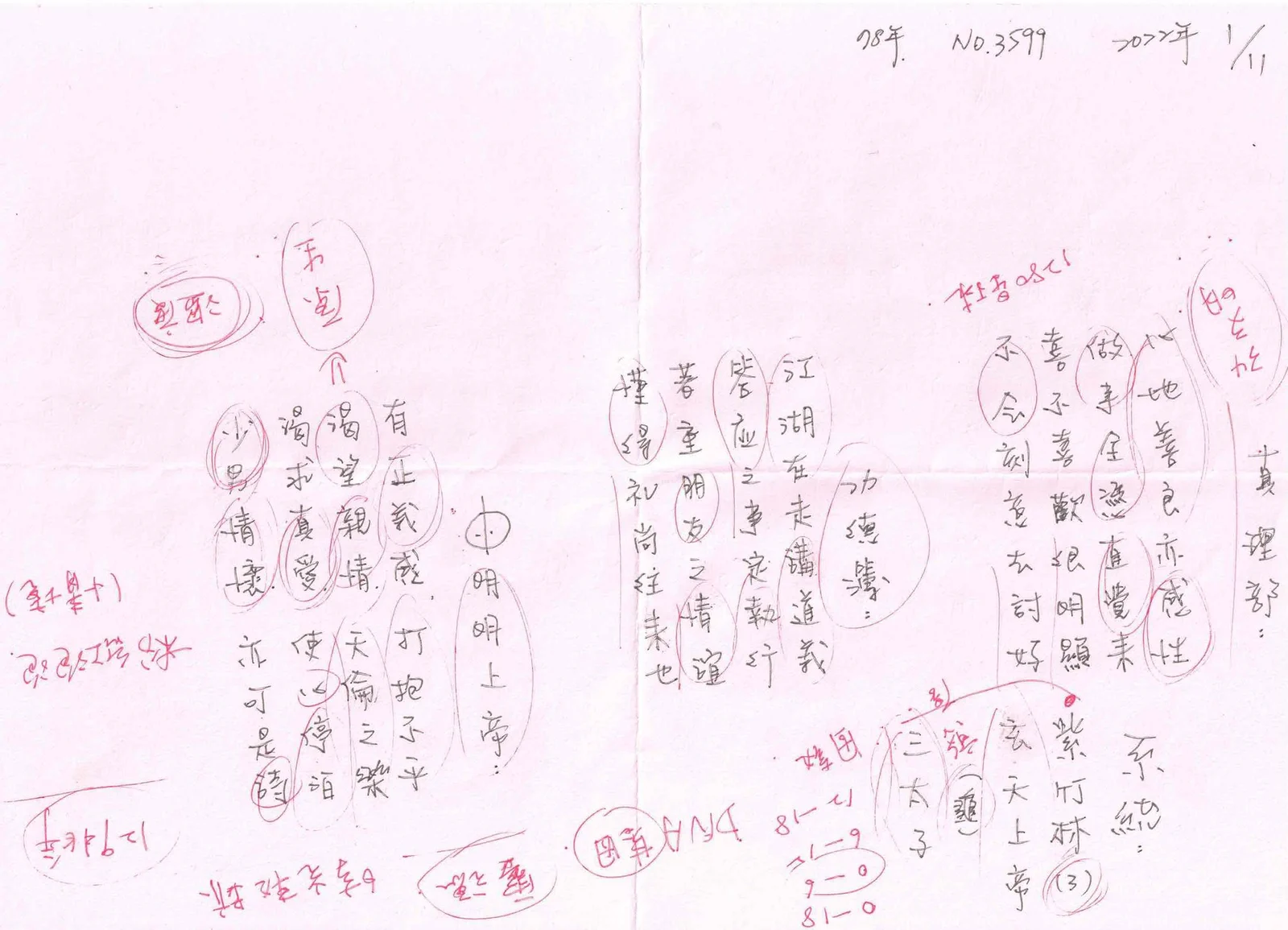
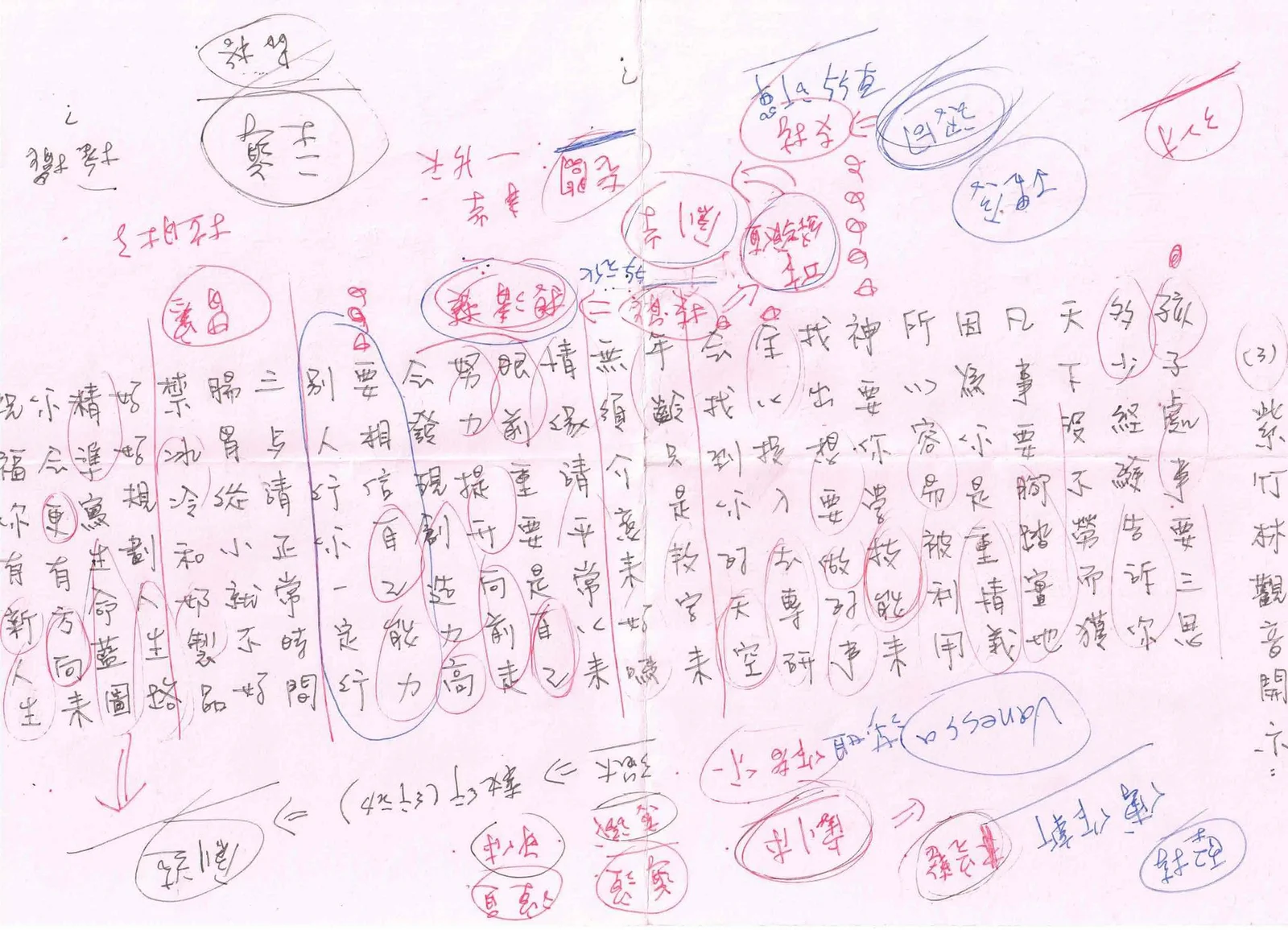
She took out a sheet of pink paper, A4-sized, and began to write with a black ballpoint pen; that took another twenty minutes. When she had finished, Sajie looked up and asked what year I was born. After I told her, she noted in the upper-right corner of the pink paper: "Year 78 [1989]. No.3599 2022 1/11."
"You are a child of the Purple Bamboo Grove; your soul is three years old." Before I could even wonder at this, Sajie began to explain that the cosmic system has several branch lines—Guanyin of the Purple Bamboo Grove, the Xuantian Shangdi, the Third Prince, and so on; our souls belong to these different systems, and mine belongs to Guanyin of the Purple Bamboo Grove. Sajie said a great deal about metaphysics, and what I gathered was this: if a life is like going through university once, then Guanyin of the Purple Bamboo Grove is the university's president, and there is a whole class of fellow students enrolled at this Purple Bamboo Grove University.
Once she had finished, Sajie talked with me, the subjects ranging from my state of body and mind to my aunt's worries about my career. She turned the pink A4 sheet toward me, and as we talked she switched between a red pen and a blue one in her hand, scrawling the keywords from our conversation beside her neat black writing. Before we ended, I asked her a question: "Does life repeat itself? I mean—do we repeat the lives of our ancestors?" She said no. The morning after my consultation, my aunt and my grandfather took the great-grand-aunt to visit the prophet. The prophet mentioned my visit the night before, telling my aunt: "Wei-Chen has a very pure soul; he won't starve, so whatever he wants to do, let him do it."
Kayo (Spring)
Two days after the great-grand-aunt died on Qingtian Street, I met Kayo.
On January 16, 2022, One Art Taipei opened at the Sherwood Hotel; after this show, the Sherwood would close its doors for good. Around two that afternoon, I came up from the smoking area downstairs to the hotel-room exhibition space; the narrow corridor was packed with people holding their phones up to take pictures, and for a moment I had the illusion of having wandered into a concert. When I turned my eyes to those raised screens, a familiar figure surfaced on them; the girl who had pushed in behind me whispered that it was JJ Lin. So a star had come into our space—he had come to see Lin Yu-hsi's photographs. The gallery owner was explaining the work in earnest, while telling the event photographer to take more shots of JJ Lin. After he left, the crowd slowly thinned. As I rested on a chair, I caught sight of the "Fairy Artist" Ni Jui-Hung and went over to greet her; I always call her Azhu.
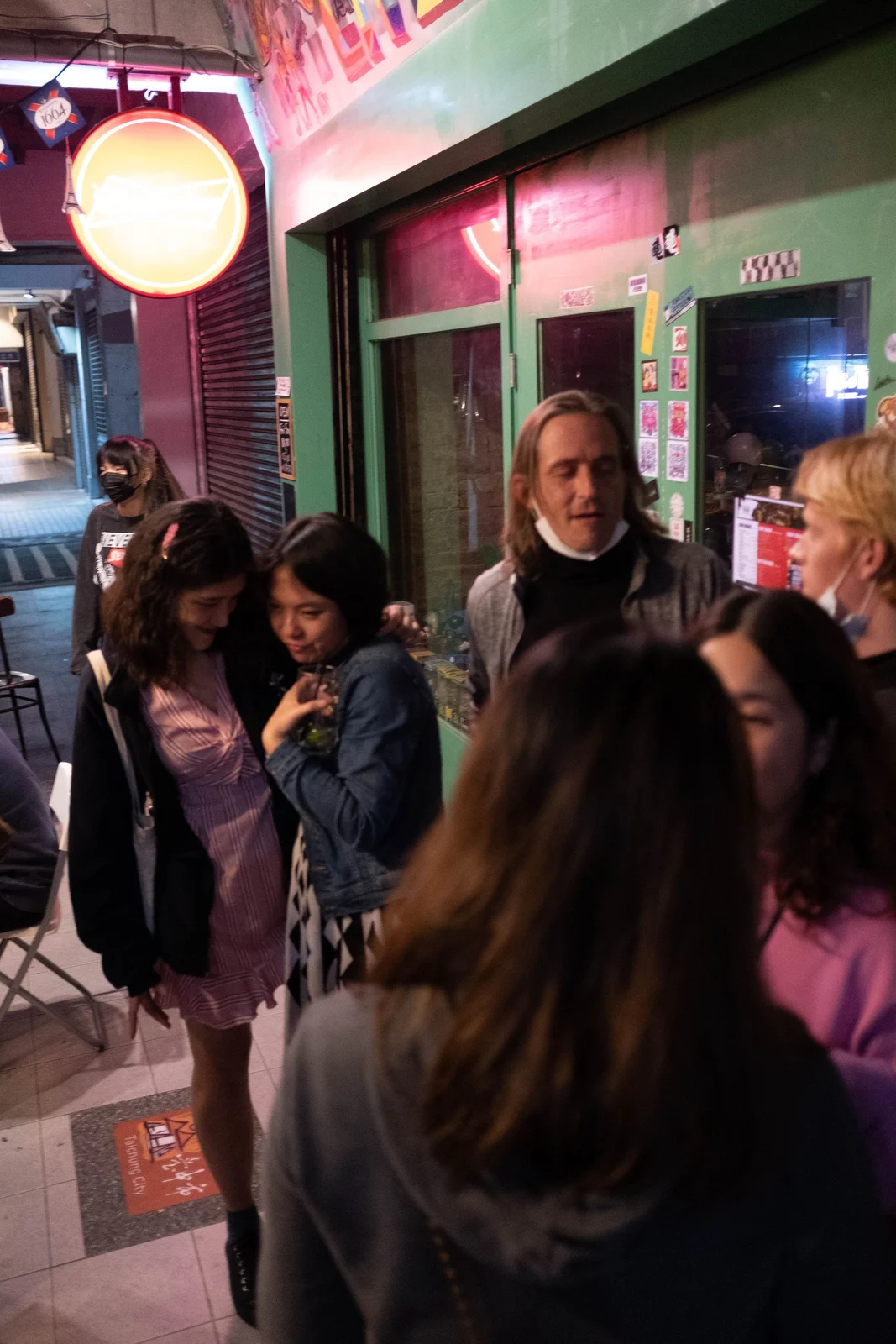
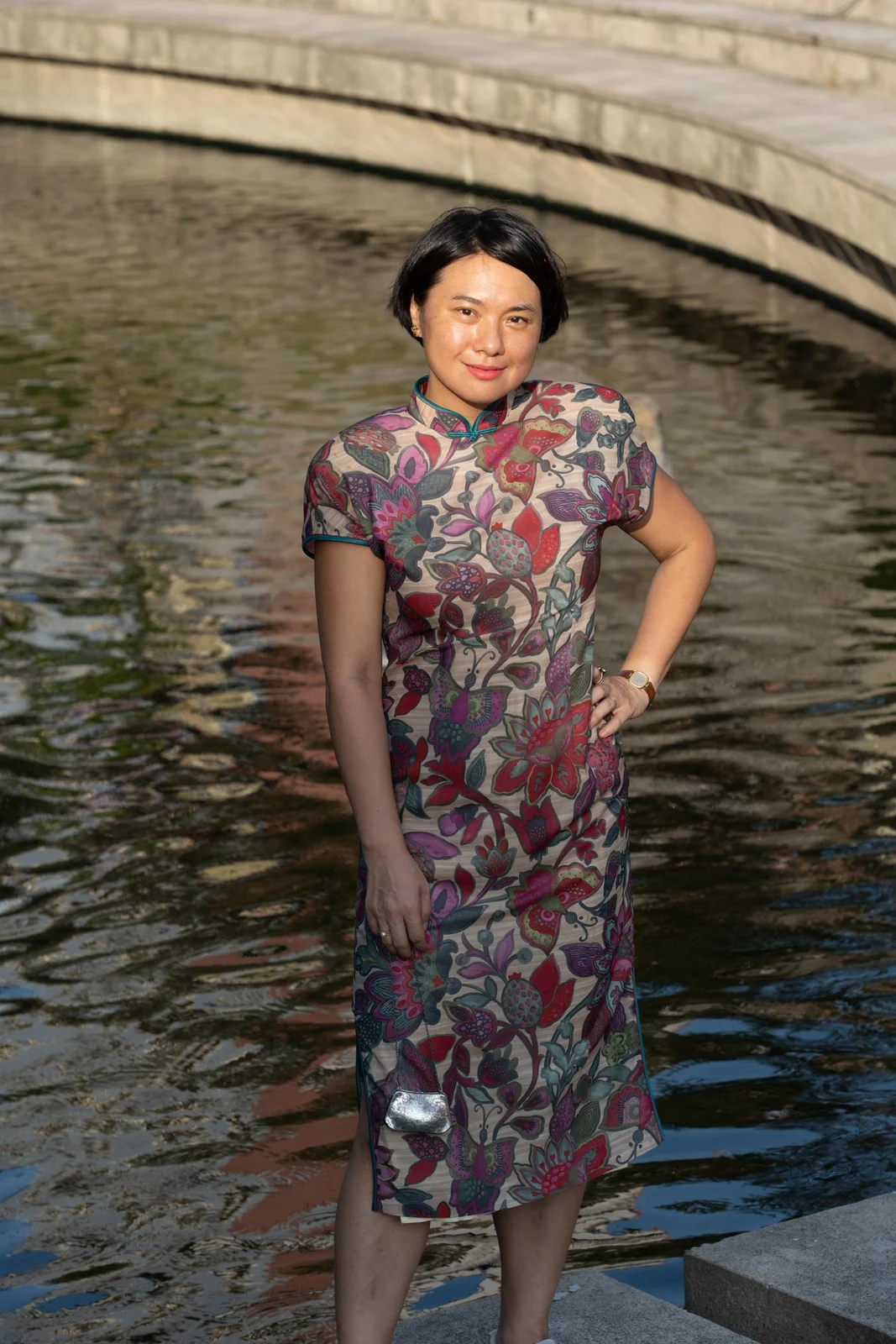
I had met Azhu two years before, in July, while photographing an event in Taipei; afterward she came to the Xiling Temple on Tiezhen Mountain in Dajia to do fieldwork, and a few times I was her local guide. That day Azhu had brought along a friend whose accent mixed British and American English. The friend wore a fine qipao embroidered with red flowers and green leaves—old, but well kept. Over it she had thrown a denim jacket, with Converse on her feet and a jade ring on the index finger of her left hand. She was born in Tokyo, came back to Taiwan to live for a few years, then emigrated to Canada; after that she lived in the United States, in Dubai, in Sri Lanka, and in Hong Kong, before the anti-extradition movement drew her back to Taiwan. She is a writer; I call her Kayo.
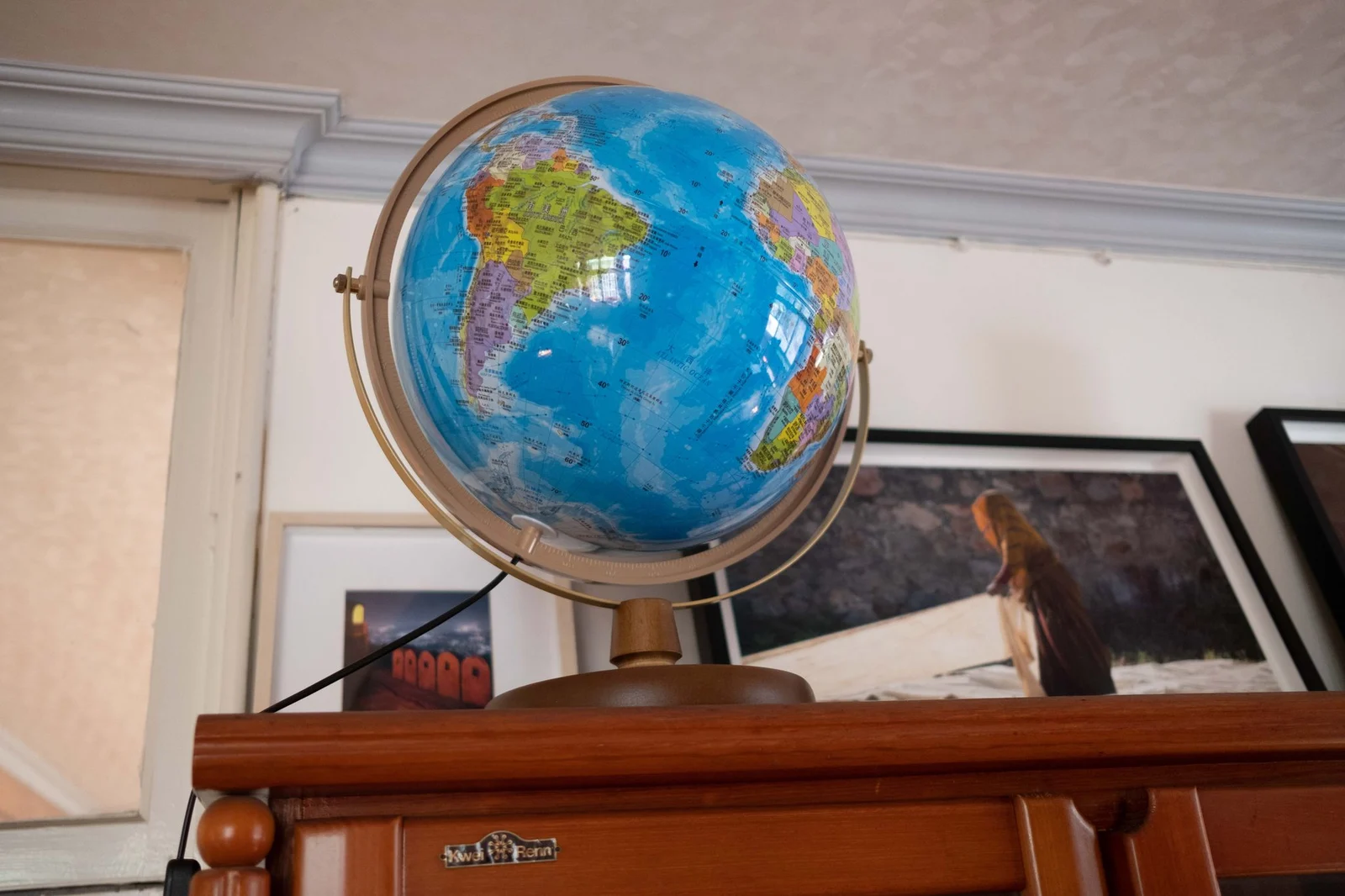
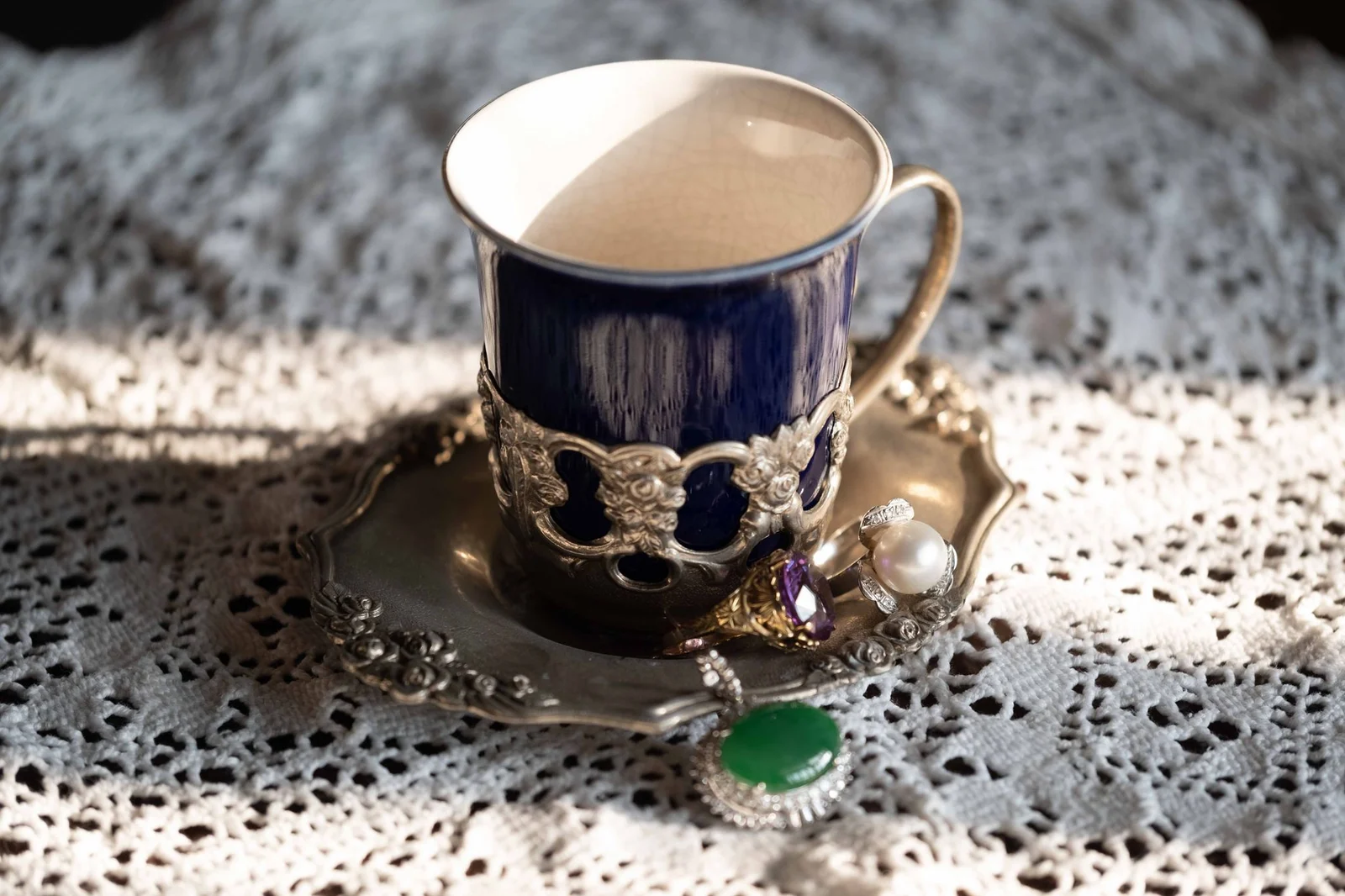
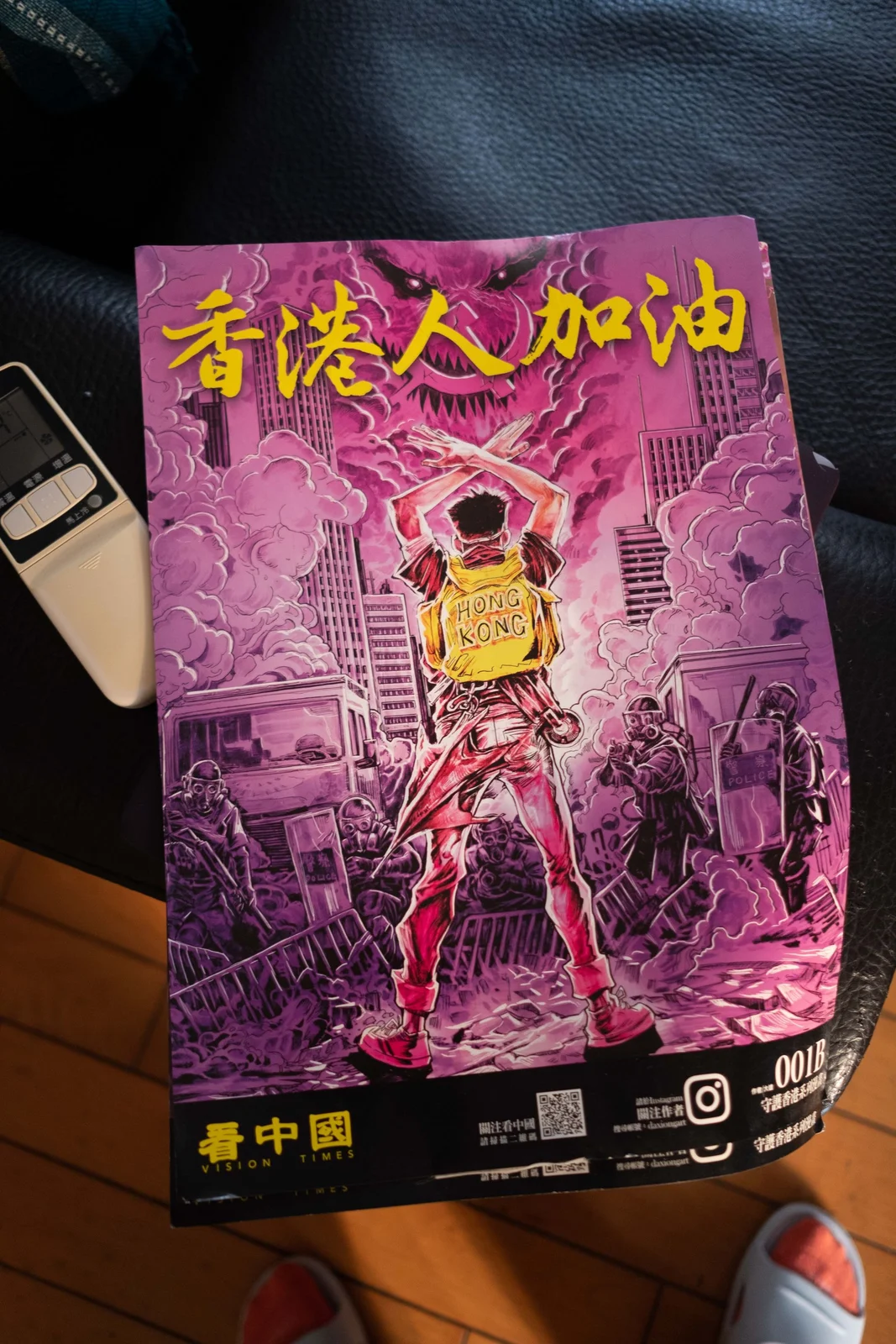
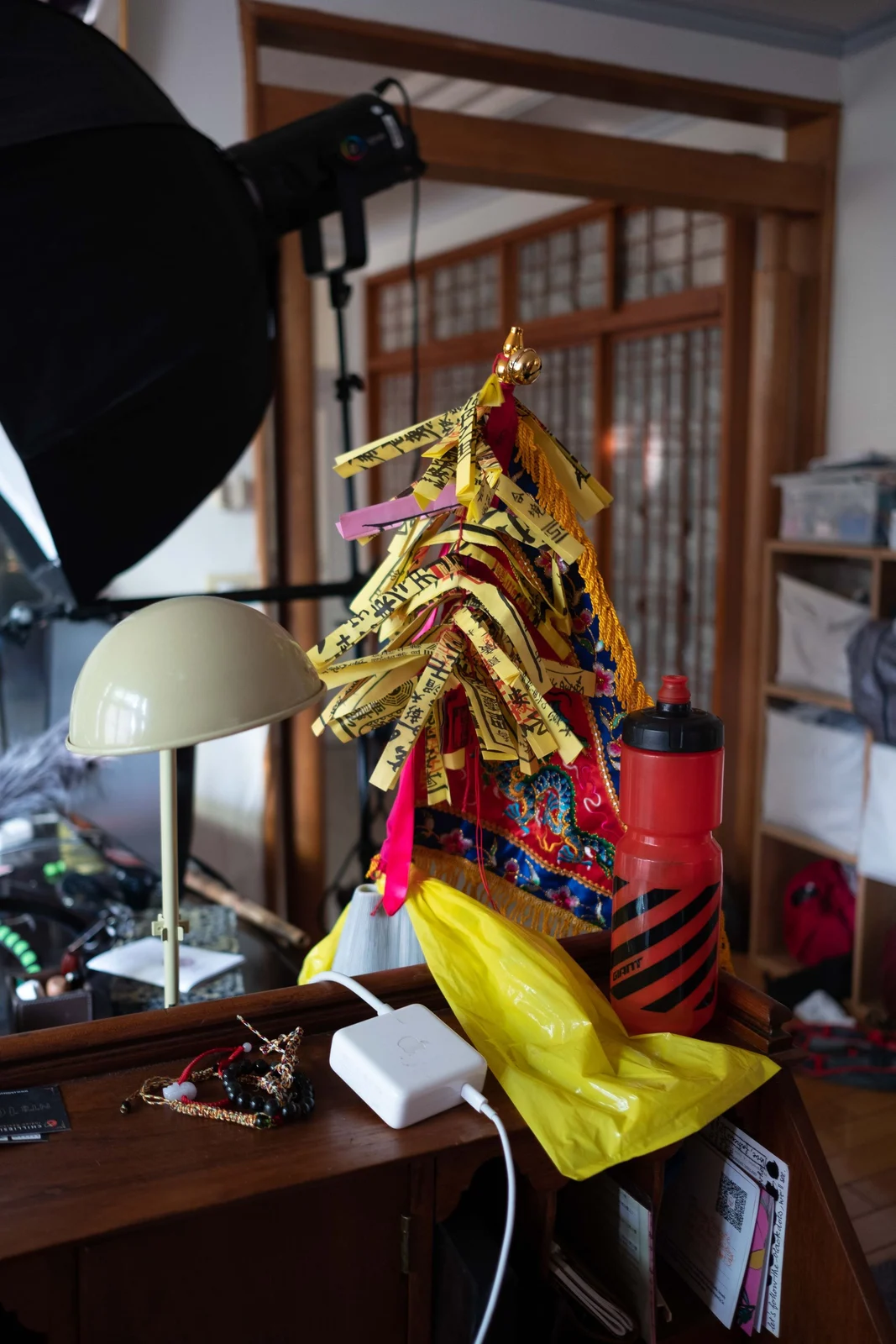
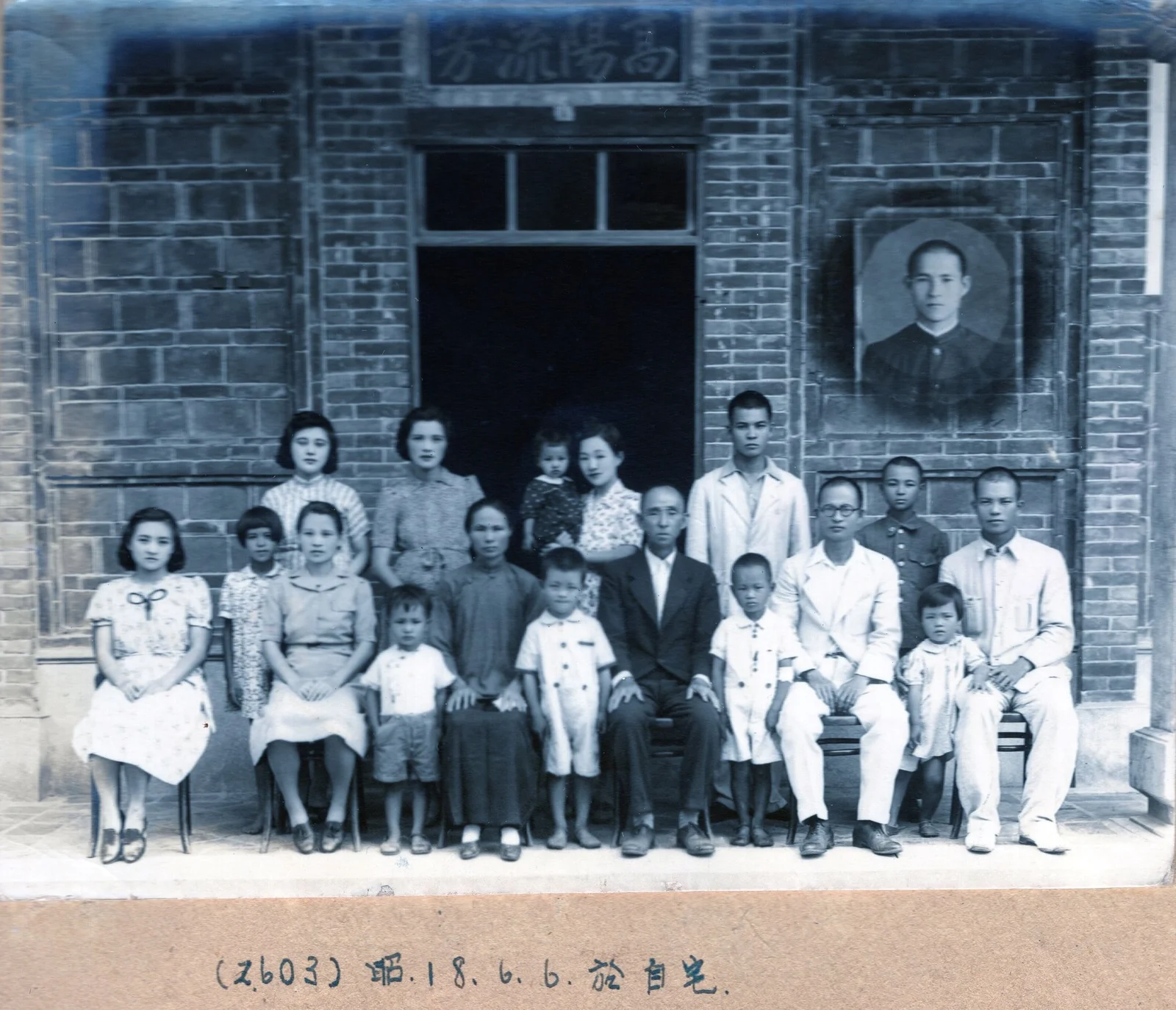
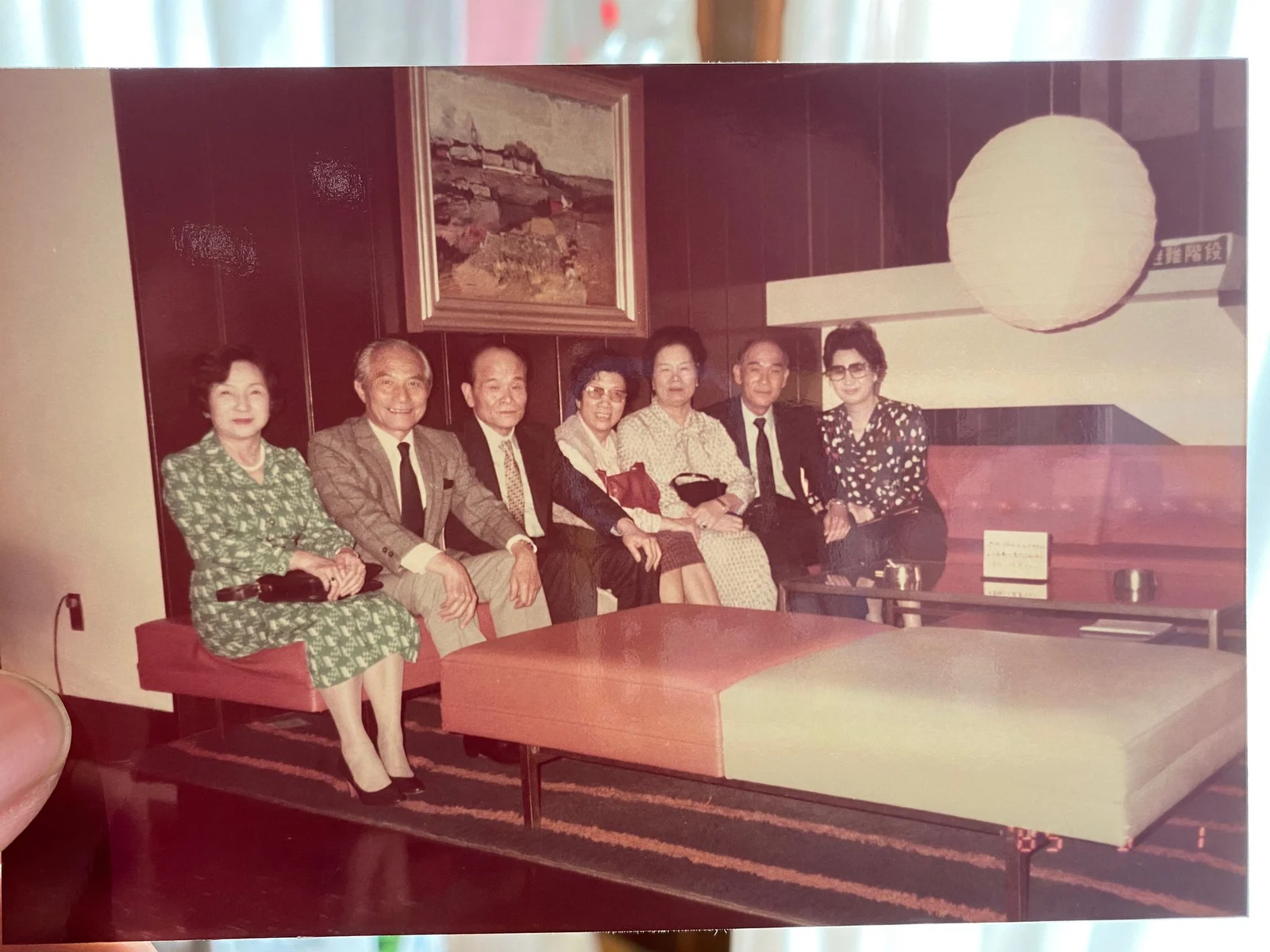
As we talked, Kayo happened to mention that her mother's family came from the Lin family of the Cheng Ching Hospital in Taichung. I remembered a photograph I had once seen—a wedding portrait of my great-grand-uncle marrying a daughter of Lin Cheng-ching.
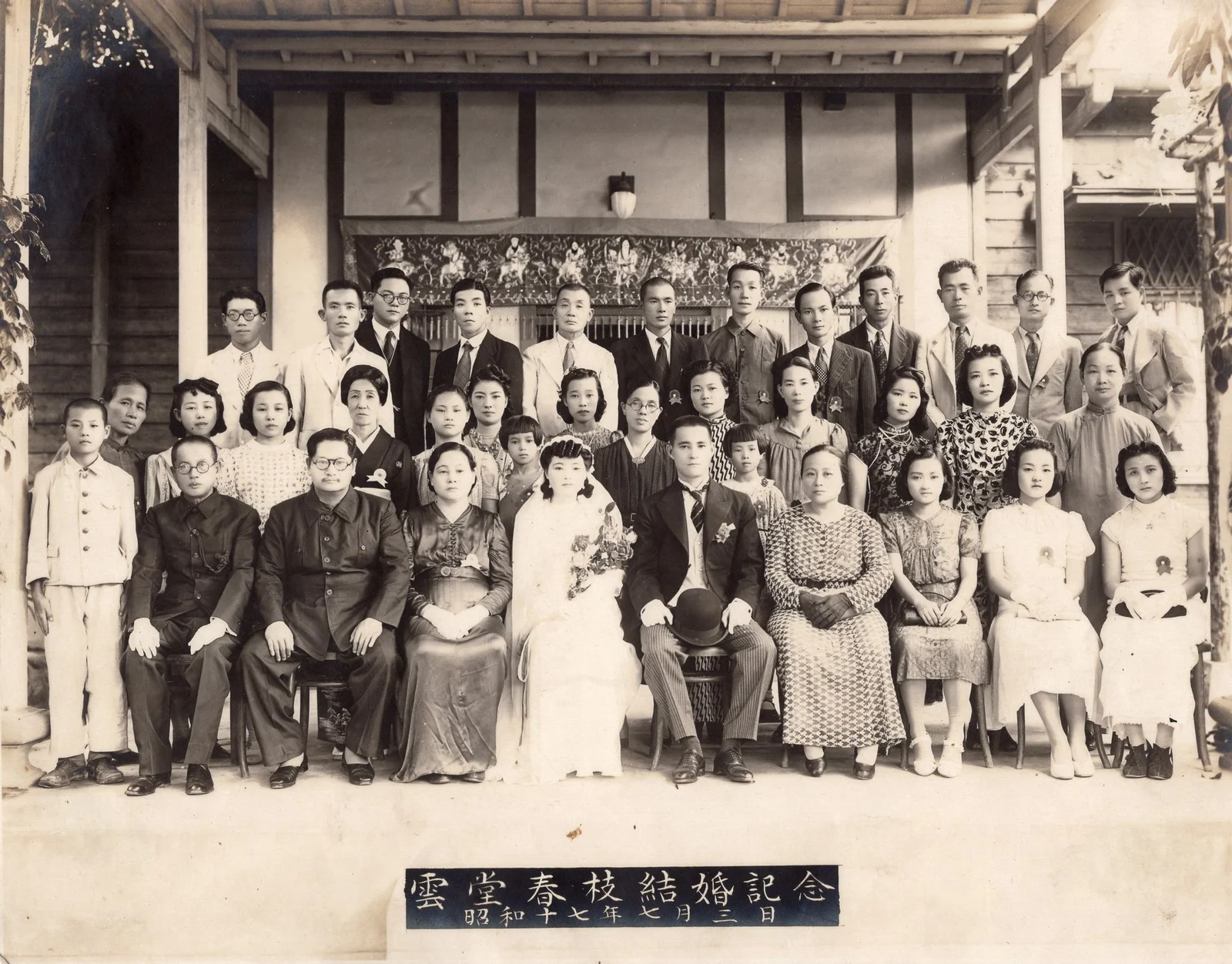
Lin Cheng-ching is third from the left in the front row
My great-grandfather Hsu Yun-Yang is second from the right in the back row
Hsu Hsi-Yu is third from the right in the front row
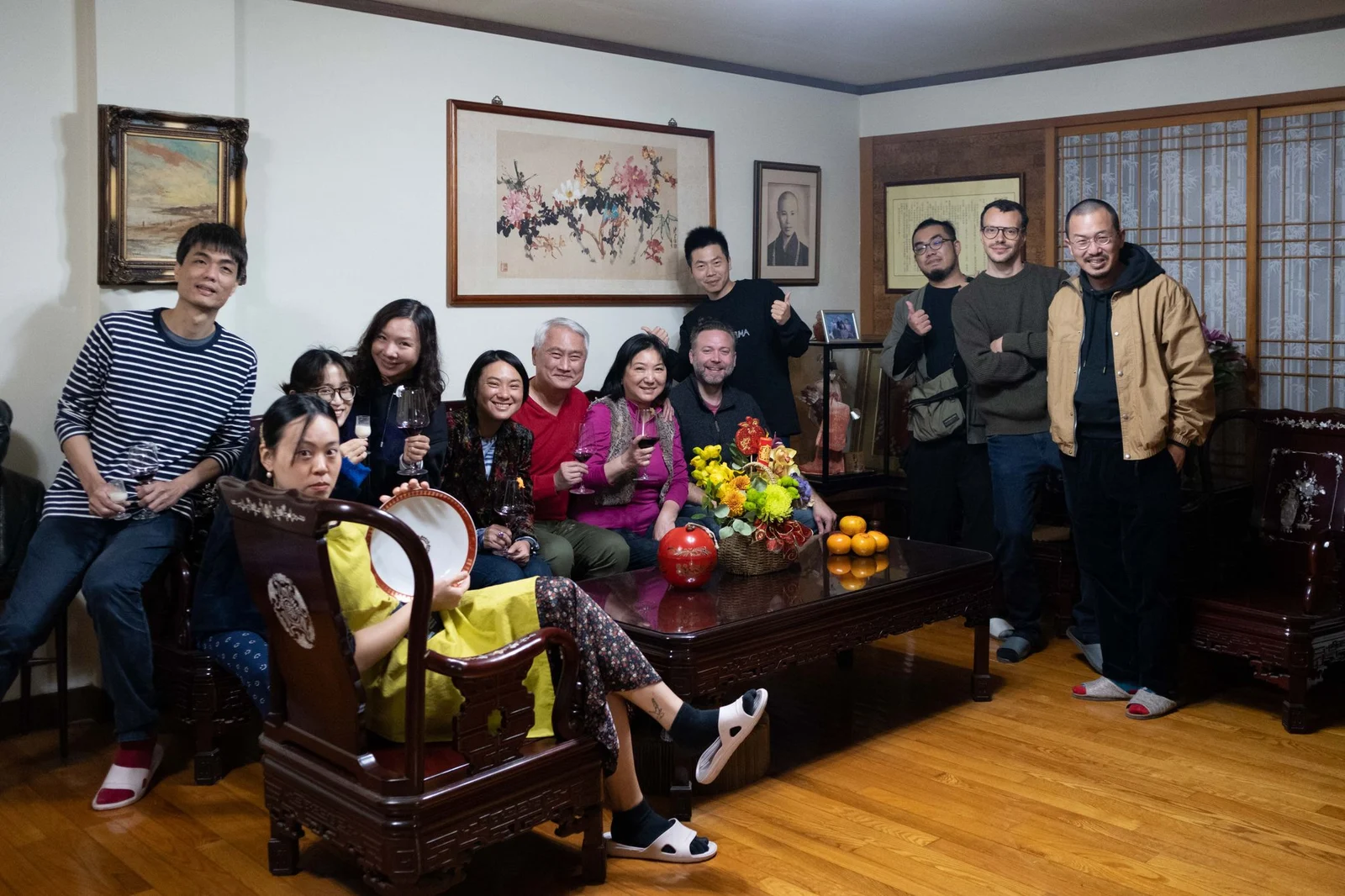
My girlfriend's studio at the time was near Kayo's home, so the weekend after the show closed I went to visit her. When I arrived, Kayo came down to let me in and led me up to the second floor. We changed into slippers, slid open the Japanese door, and stepped into the space they usually use for receiving friends and as a studio. She and her husband had only just returned to settle in Taiwan, and the floor was covered with friends' works not yet on the walls—mostly paintings and photographs—along with countless unopened boxes of books. Two walls served as bookshelves, lined almost entirely with books in their original languages—every kind, though mostly hardcover literature and design. There was a corner given over to zines and art books, too, and I leafed through them with relish. Below the shelves stood a small wooden table for vinyl, and on the turntable beside it Radiohead's In Rainbows was playing. On the wall diagonally across from the turntable hung a Wheel of the Six Realms, about a hundred and twenty centimeters tall; on the wall facing it, a portrait photograph of Master Sheng Yen.
We settled onto the sofa, and I showed her the wedding portrait. She pointed to the bearded man in the front row and said: this is my great-grandfather, Lin Cheng-ching. She made a video call to her mother, and when Kayo's mother saw the photograph she asked why I had it. After I explained my connection to it, she began to name her relatives one by one—which row, counting from which side, and who each person was to her. When she reached the woman seated beside the bride, Kayo's mother said that her grandmother had been a devout Buddhist, and that when her bones were gathered after cremation, śarīra relics were found among them.
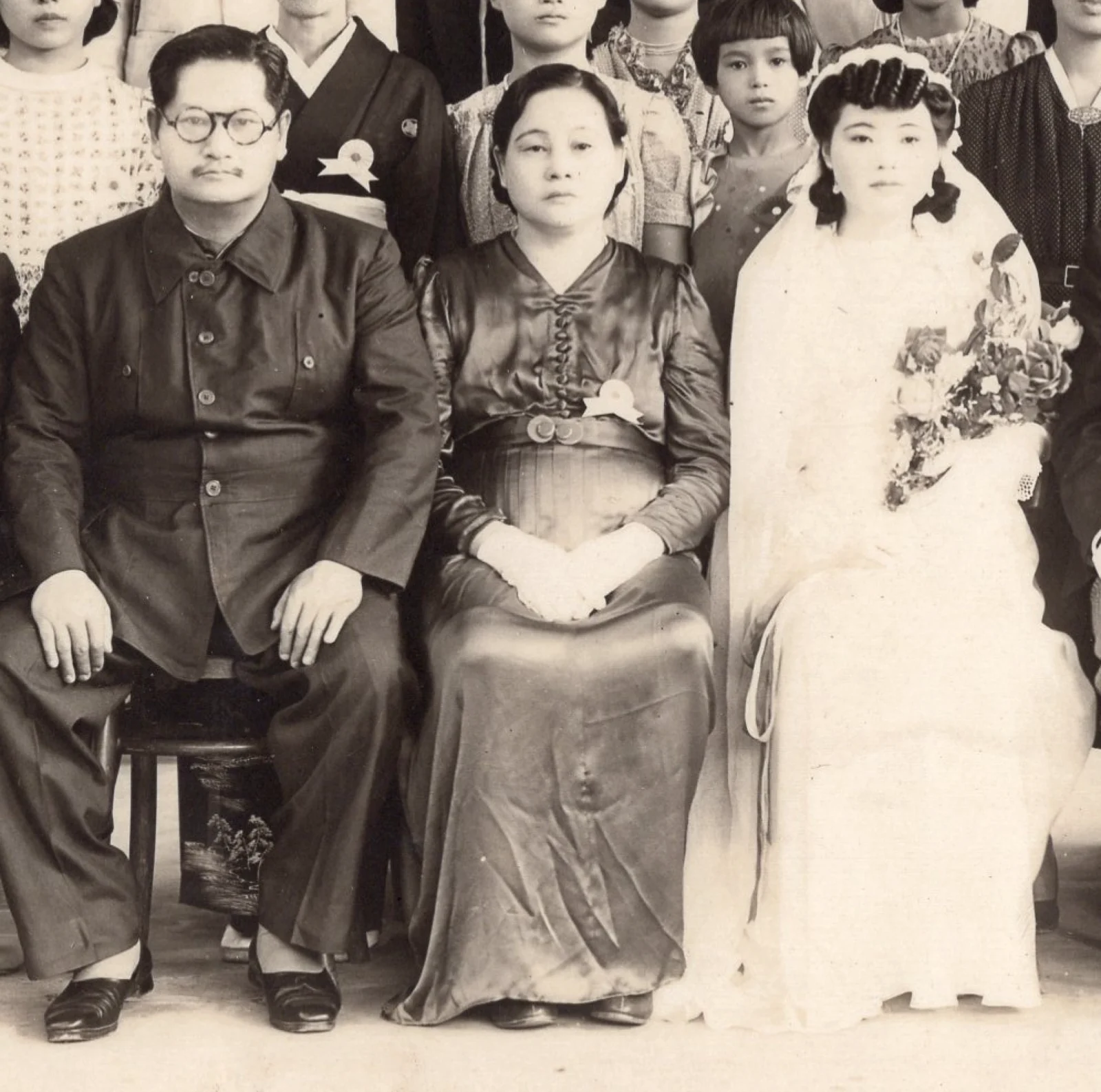
The longer Kayo and I knew each other, the more the ties between her family and my grandfather's, built up over generations, unfolded layer by layer. At first the discoveries astonished us both, but in time we grew used to the connections, for they were a bond handed down from our forebears—perhaps it was bound to happen that the two of us would come to know each other. Kayo was researching her family history as material for her writing, which opened the way for us to research each other's family histories together, and we became good friends as well.
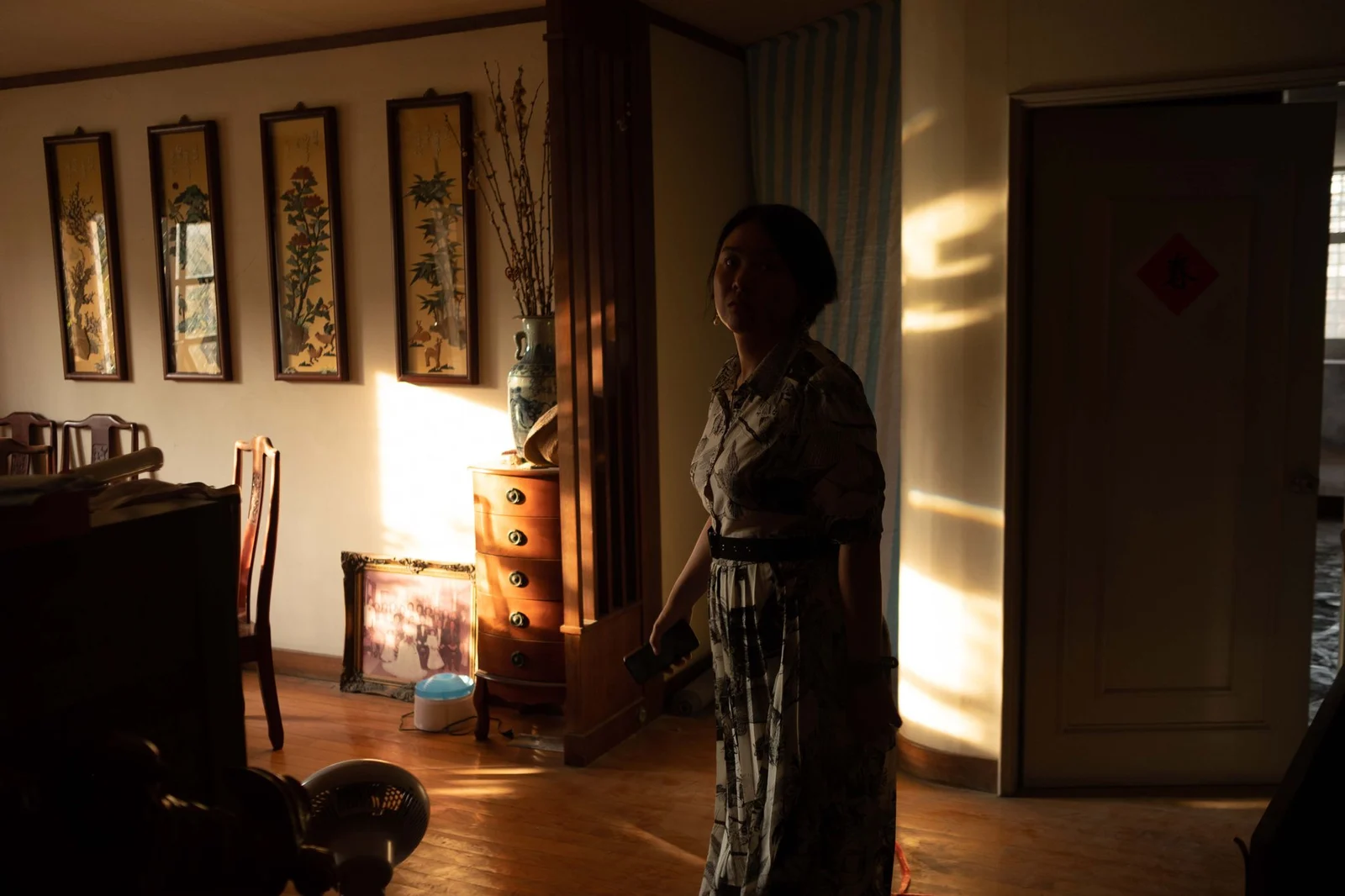
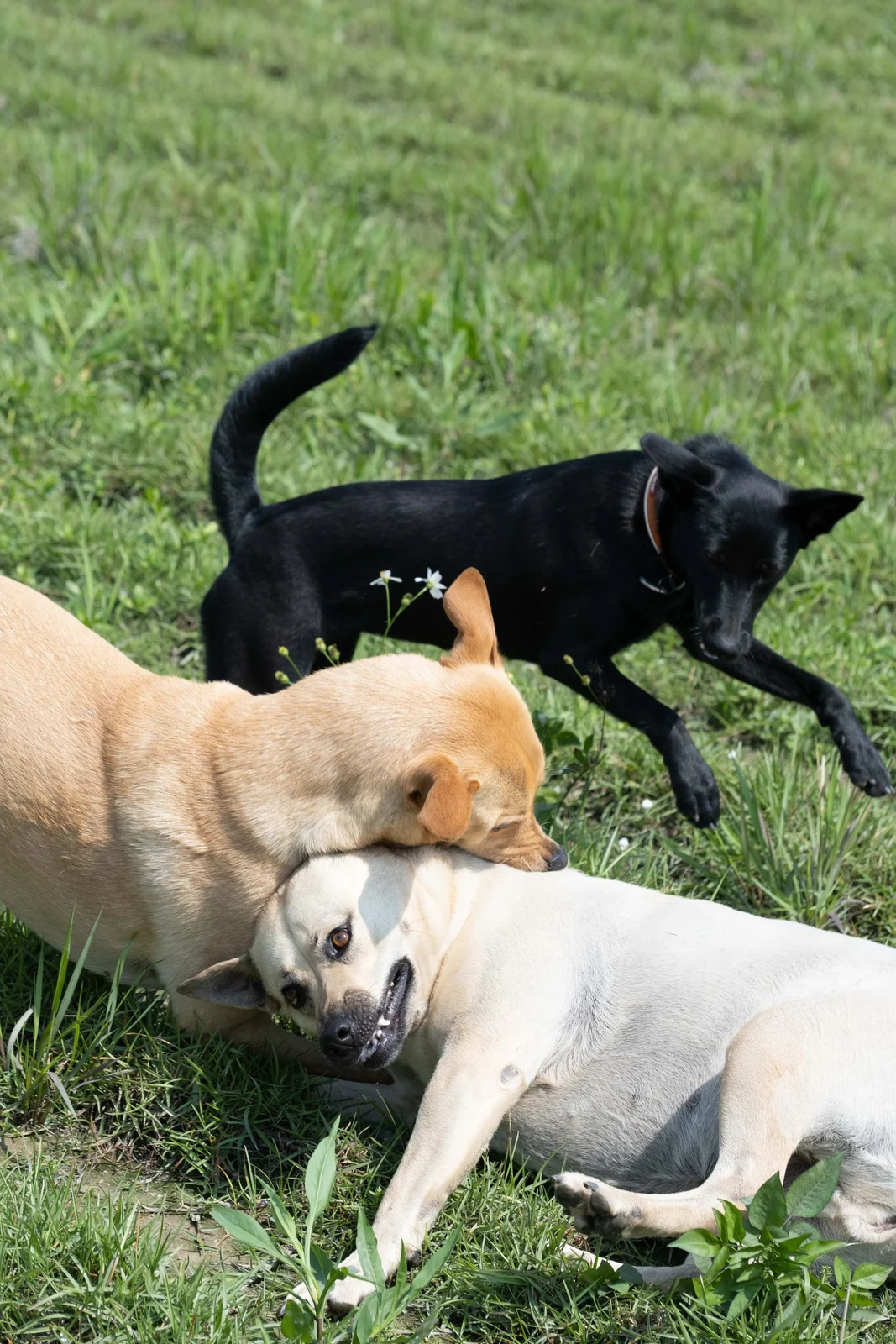
At first we set aside one fixed day each week to meet at her home, to look at old photographs and some documents and letters, and to share what each of us had pieced together about our family histories over the past week. Sometimes we talked over possible collaborations—a text-and-image project, say, where she would do the writing and I the images, with her husband Derek handling the book design. I took quite a few photographs at her place, too; her grandmother's belongings, their two dogs, all came before my lens, and one of them is even spending this winter break at my house—Kayo calls it Uncle Wei-Chen's winter camp.
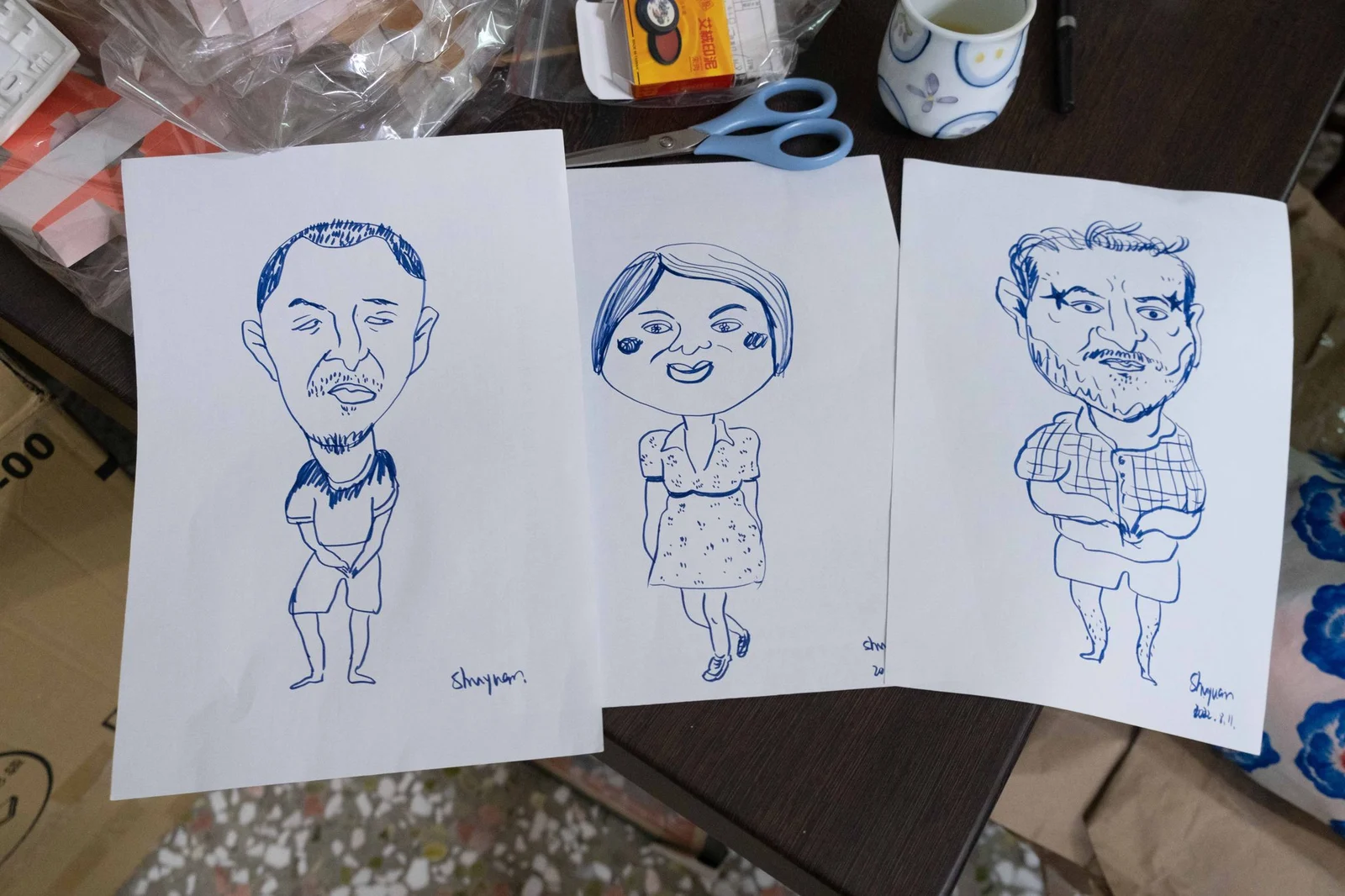
As the months went by, I came to know her parents as well, and only then did I learn that it was the great-grand-aunt who had brought the two of them together—so they both call her their matchmaker. And the house in Tokyo where Kayo was born, they had bought from the great-grand-aunt too. Again and again we found each other's families in our own family photographs—Kayo's grandfather posing with the great-grand-aunt in Japan, say, or, in my great-grand-uncle's album, a glimpse of Kayo's grandfather, since the two had been classmates at Taichu First Middle School. Looking at these group portraits, I found that the features of Kayo's ancestors and of mine had surfaced again in our own faces; once, an artist friend, Shuyuan, drew portrait sketches of Kayo and me, and the me she drew looked just like my great-great-grandfather, while Kayo looked like her grandfather. Later I came to see something: my grandmother's death, my moving into Qingtian Street because of the solo show, meeting Kayo two days after the great-grand-aunt's passing—these things began to link into a single whole. None of them stood alone.
Text and photography: Wei-Chen Li
Text editing and proofreading: Tsai Chia-huan
Book design: Chou Fang-yu